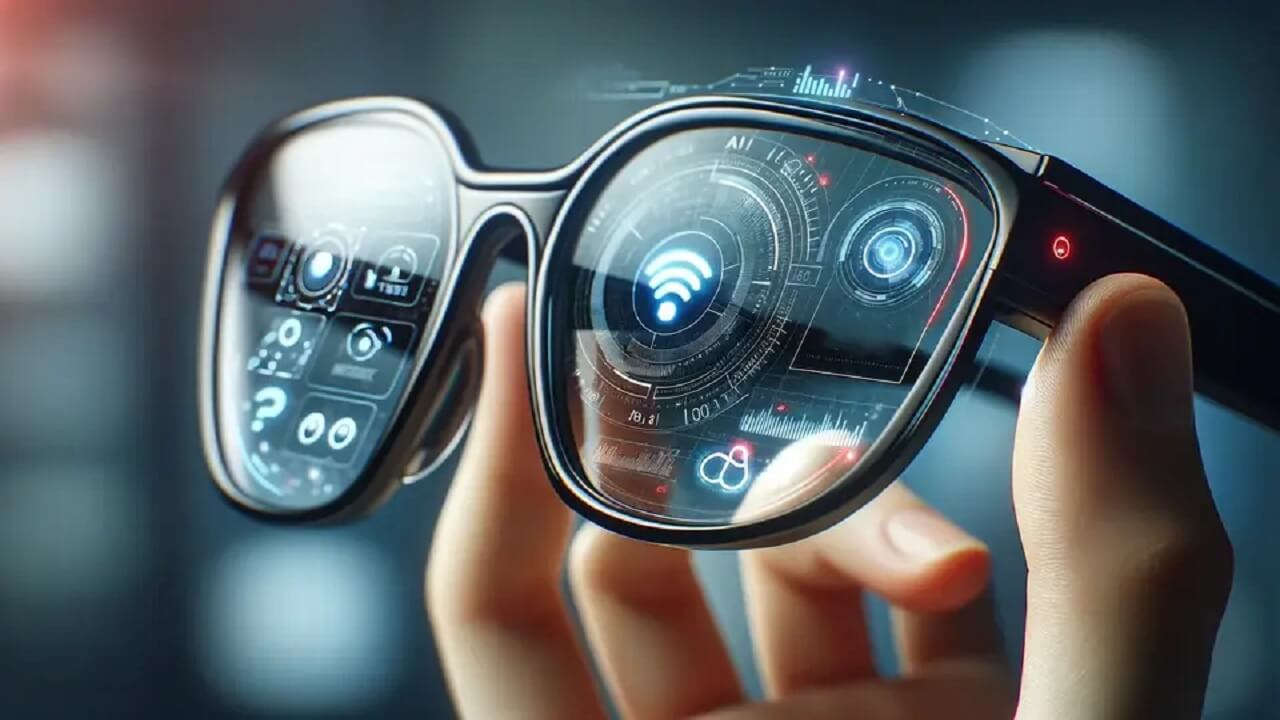
The technological landscape is perpetually shifting, with the next “big thing” always on the horizon. For over a decade, the smartphone has reigned supreme as the central hub of our digital lives, a constant companion that connects us to the world. However, a new contender is emerging from the realm of science fiction to challenge its dominance: smart glasses. Visionary tech leaders are making bold predictions that these intelligent, AI-powered wearables will soon relegate the smartphone to history. This article delves deep into the heart of this debate, exploring whether smart glasses truly represent the future of computing or if they are destined to remain a niche accessory, weighing the potential against the considerable hurdles that lie ahead.
The Visionary’s Claim: A World Without Smartphones
The proposition that smart glasses could replace smartphones is not merely a product of internet speculation; it is a vision shared by some of the most powerful figures in the tech and telecommunications industries. Francesco Milleri, the Chairman and CEO of EssilorLuxottica, a global eyewear giant and key partner of Meta, has boldly stated that smart glasses are “poised to become the central device in people’s lives, possibly replacing smartphones” . He envisions a near future where “hundreds of millions of smart glasses interconnected with each other” create vast, new communities, shifting the paradigm of how we interact with technology and each other .
This sentiment is echoed by Erik Ekudden, the Senior Vice President and Chief Technology Officer at Ericsson. During a meeting at the world’s largest mobile exhibition, MWC 2026, Ekudden declared, “AI smart glasses have the potential to change the world. AI smart glasses will replace smartphones within 3–5 years” . His conviction is rooted in the massive adoption of generative AI; with over a billion people using it daily, he argues that transferring this potential to a more accessible and intuitive form factor like glasses presents a “huge opportunity” . Both industry leaders agree that the foundation for this shift is already in place, and it is only a matter of time before consumer behavior catches up with the technological capabilities.
The Rise of the Contender: Meta and the Android XR Ecosystem
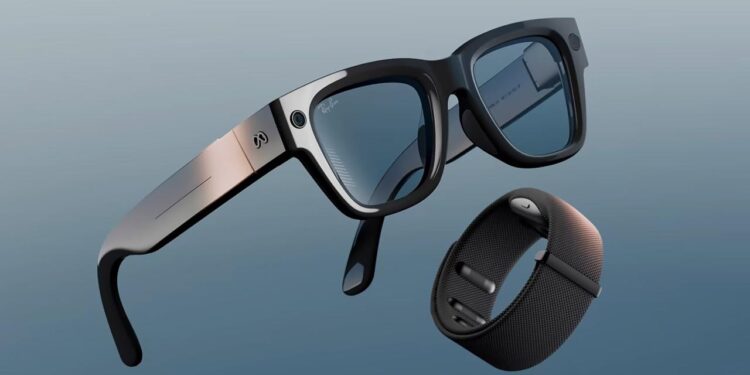
Meta is currently leading the charge in the smart glasses arena, holding a commanding share of the global market . Its strategy has been to blend cutting-edge technology with desirable aesthetics, partnering with renowned eyewear brands like Ray-Ban to ensure their devices are both functional and fashionable . The success of this approach is evident in sales figures. Meta has reportedly sold millions of pairs of its Ray-Ban smart glasses, which allow users to take photos, record videos, livestream, and interact with a built-in AI assistant through voice commands .
Building on this momentum, Meta recently unveiled its advanced model featuring an in-built display . This display allows users to read text, watch small videos, view directions, and see live translations, offering a resolution higher than many of Meta’s VR headsets . This model is controlled by a unique Neural Band, a wristband that uses electromyography (EMG) to interpret hand gestures and navigate apps, signaling a move towards more intuitive, screen-free control interfaces .
Not to be left behind, Google is mounting a significant challenge with its Android XR platform. At its I/O 2026 developer conference, Google showcased smart glasses built in partnership with Samsung, and stylish brands like Warby Parker and Gentle Monster . The first wave of these products will feature audio-only glasses, but future iterations will include a display . By integrating its powerful Gemini AI model, Google is positioning these glasses as an everyday “heads-up” device that allows users to access AI assistance without disengaging from the physical world . The ecosystem is further strengthened by partnerships with hardware vendors like XREAL, who are working on devices that split processing between the glasses and an external puck to manage weight and performance . This intense competition between Meta and Google is set to accelerate innovation and bring these devices to a wider audience.
Beyond Personal Use: The Industrial and Enterprise Potential
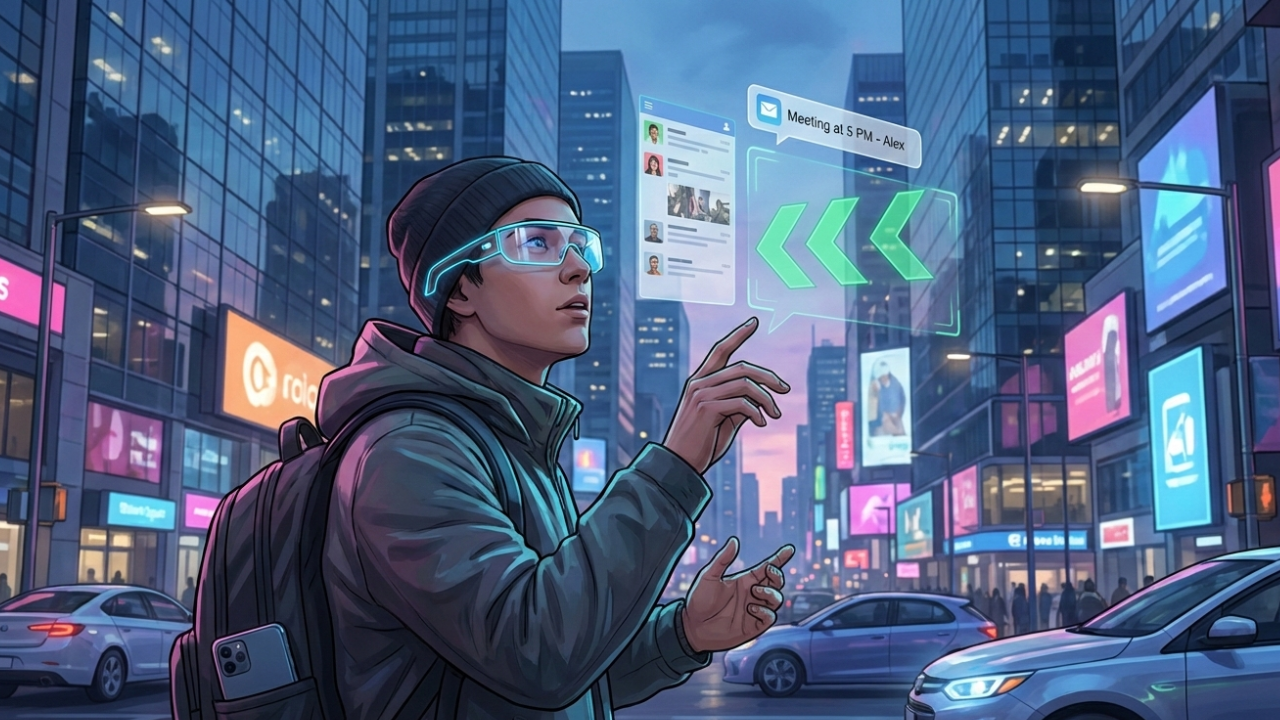
While consumer adoption is the most visible battleground, the potential for smart glasses in industrial and enterprise settings is equally transformative. This is where the concept of “Physical AI” comes into play the application of AI to solve real-world problems in logistics, manufacturing, and maintenance . Smart glasses are emerging as the ideal interface between human workers and complex AI systems.
In factories and warehouses, smart glasses can provide real-time, hands-free information. For instance, a worker wearing smart glasses can see picking locations and product quantities displayed directly in their field of view . Vision AI can automatically recognize barcodes, and integration with warehouse management systems is streamlined, eliminating the need for handheld scanners and improving efficiency . In maintenance, when a technician looks at a piece of equipment, the glasses can recognize its tag and instantly display schematics, manuals, and inspection histories . This standardizes complex procedures that previously relied on individual skill levels and memorization.
This industrial application is being bolstered by major players. At CES 2026, Siemens announced a collaboration with Meta and NVIDIA to integrate industrial AI into smart glasses, providing factory workers with real-time voice guidance and task feedback . This enterprise adoption could be the proving ground for the technology, refining the hardware, software, and user experience before it becomes a mainstream consumer product, much like GPS and Wi-Fi were initially adopted by the military and industry.
The Hurdles: Why a Smartphone Replacement Isn’t Inevitable
Despite the bold claims and significant progress, a chorus of experts and consumers remains skeptical. The path for smart glasses to dethrone the smartphone is fraught with challenges that could keep them a complementary device rather than a replacement.
A. The Utility and Habit Problem
Smartphones are not just devices; they are deeply ingrained into the very fabric of modern society. Data from the UK shows that nearly all adults aged 16 to 24 own a smartphone, and a vast majority of people use them for a staggering array of tasks from online banking and navigation to entertainment and messaging . Convincing billions of people to abandon a device that fits in their pocket and does everything for a pair of glasses is a monumental behavioral challenge. One expert noted, “We are too addicted to doom-scrolling before bed – can’t properly have your face in the pillow while wearing smart glasses” . This highlights the awkwardness of transitioning habitual, comfort-driven phone use to a face-worn device.
Furthermore, experts argue that smart glasses have yet to provide a compelling “killer app” that makes them indispensable. As one analyst put it, smart watches have become a multi-billion-dollar industry while still not coming close to replacing smartphones; they serve as a companion, not a replacement . The sentiment is that smart glasses will likely follow a similar path, excelling in specific use cases like hands-free navigation, photography, or work tasks, but falling short for others like scrolling social media or typing long emails . The “utility-per-gram ratio” simply doesn’t match a smartphone yet .
B. The Privacy and Social Acceptance Concern
Perhaps the most significant obstacle to mass adoption is the privacy issue. The term “glasshole” emerged over a decade ago to mock early adopters of Google Glass, driven by fears of being surreptitiously filmed and a general social unease with computers on our faces . These concerns are resurgent today. Smart glasses equipped with cameras and microphones make it incredibly easy to record others without their consent, even with small LED indicator lights that many argue are not sufficient notice .
This potential for “creepiness” has fueled a growing backlash. There are reports of people using their smart glasses to harass strangers or surreptitiously record them, creating an environment of distrust . As one tech reporter noted after having a jarring encounter with a person wearing Meta glasses, “there’s going to be so much backlash” . For smart glasses to become ubiquitous, society will need a massive paradigm shift to normalize this level of constant ambient recording, which many are unwilling to accept. While some companies are exploring camera-less, audio-only glasses to mitigate this, the privacy problem remains a critical hurdle .
C. The Technological Bottleneck: Form Factor and Battery
The physical design and technical limitations are also significant barriers. For a device to be worn all day, it must be lightweight, comfortable, and stylish. Early iterations of smart glasses were often clunky and aesthetically unappealing. Even the latest, more refined models face trade-offs. The need to pack in powerful processors, a capable battery, antennas, and a display adds bulk . Snap’s latest “Specs” glasses, which can function independently of a phone, are significantly larger and heavier, making them look uncomfortable for everyday use .
Battery life is a persistent challenge. To support always-on AI and display features, glasses need substantial power, but a large battery adds weight. To solve this, some companies, like XREAL, have split the computing into a separate external device that can be carried in a pocket to reduce the weight on the user’s face . While innovative, it adds another component to manage, compromising the goal of simplicity. The market research reveals a disconnect between aspirations and reality. While Meta plans to produce 10 million smart glasses a year by 2026, analysts see the total addressable market for smart glasses rising to 60 million units by 2035—a figure that pales in comparison to smartphone sales, where Apple alone shipped over 230 million iPhones in 2024 . This suggests that while growth is expected, a complete takeover is not imminent.
The Current Verdict: A Symbiotic Future for Smart Glasses
So, are smart glasses replacing smartphones soon? The evidence strongly suggests that while a complete and immediate replacement is unlikely, they will carve out a significant role in our lives—working alongside our phones as a powerful and versatile companion.
For the foreseeable future, smart glasses will remain dependent on smartphones for their connectivity and heavy computational lifting . The symbiotic relationship between the two devices is where the most immediate value lies. Instead of pulling out a phone for every small task, a user could quickly glance at their glasses for directions, receive a notification, or capture a moment hands-free.
The true revolution will come not from simply removing screens, but from changing how we interact with information. Smart glasses are a harbinger of ambient computing, where technology is seamlessly woven into the fabric of our lives. They offer a tantalizing vision of a future where we are less distracted by glowing rectangles and more present in the real world, while still having access to an AI-powered digital assistant that sees what we see and knows what we need . The road to mass adoption will be a marathon, not a sprint, requiring not only technological prowess but also a cultural shift and a resolution of the deep-seated privacy concerns they raise.
Conclusion

The journey of smart glasses from a Silicon Valley pipe dream to a potential consumer reality is well underway. Led by tech giants like Meta and Google, significant strides have been made in design, functionality, and AI integration. However, the bold vision of these devices wholly replacing smartphones is a future that remains distant, hindered by practical limitations, ingrained user habits, and significant privacy hurdles.
For now, the most probable outcome is a complementary relationship where smart glasses excel in their specific strengths hands-free information, navigation, and rapid capture while smartphones remain the central hub for intensive tasks and content creation. It took 20-25 years for mobile technology to go from a novelty to a global standard . Smart glasses are at the beginning of a similar journey. They are not yet the next smartphone, but they are undeniably the next big thing in personal technology, poised to change the way we see the world.