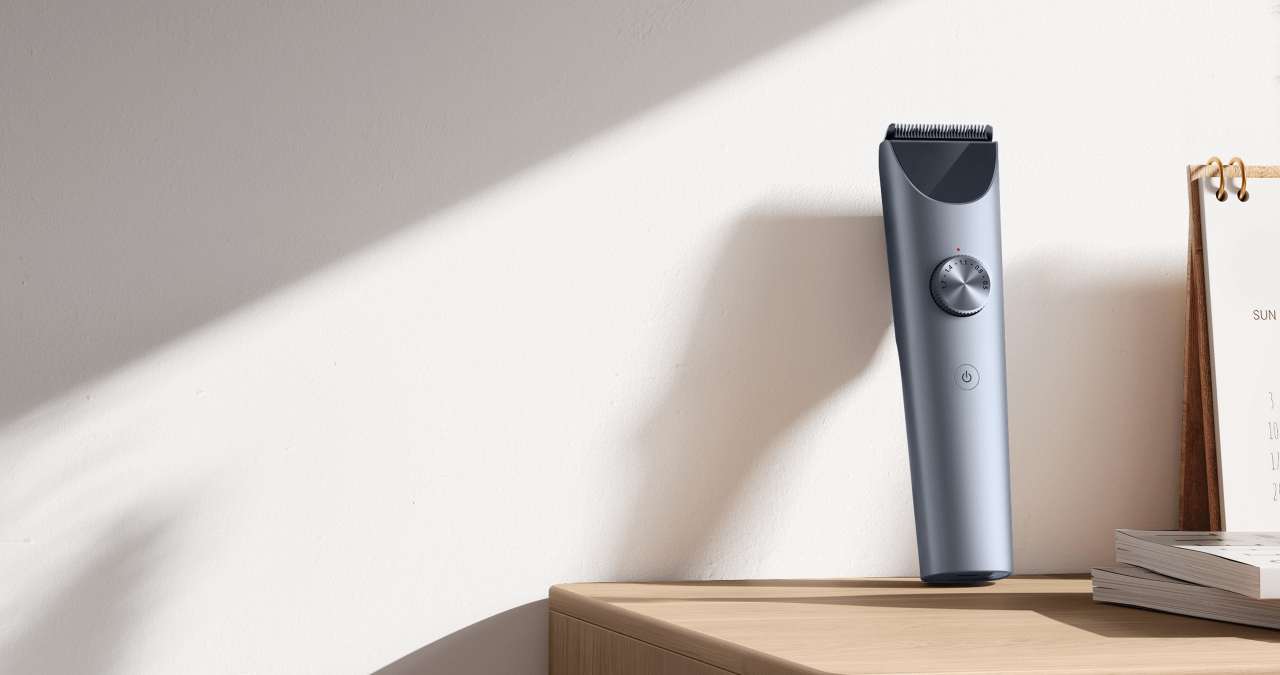
The world of personal grooming is undergoing a significant transformation. What was once a task reserved for trained professionals is now becoming accessible to anyone, thanks to the rapid integration of artificial intelligence into everyday devices. Leading this charge are smart hair clippers, a new breed of grooming tools that promise to put the skill of a professional barber directly into your hands . These devices, showcased prominently at major tech events like CES 2026, are no longer just a concept; they are a reality poised to change how we approach haircuts at home . This article delves deep into the technology behind AI-powered clippers, exploring how they work, their key players, and what the future holds for this revolutionary grooming category.
The Dawn of the Intelligent Haircut
For decades, the electric hair clipper has remained a relatively simple device, relying on the user’s skill, steady hand, and experience to deliver a decent cut. The margin for error, especially when attempting complex styles like a fade, was high, often leading to uneven results and a trip to the barber to fix mistakes. AI-powered clippers are changing this narrative by introducing an unprecedented level of guidance and automation.
The core idea is to democratize the haircut. Companies developing this technology, such as Glyde and Hairspace, aim to eliminate the intimidation factor, allowing anyone, regardless of experience, to achieve a professional-looking style in the comfort of their own home . This is made possible by sophisticated sensors, smart algorithms, and intuitive mobile applications that work in tandem to guide the user through every step.
How Does AI Hair Clipper Technology Work?
The magic of a smart hair clipper lies in its blend of hardware and software, creating an intelligent system that adapts to the user in real-time.
A. Intelligent Sensor Systems: At the heart of these devices are multiple built-in sensors . These are not your average components; they are precision instruments that track the clipper’s movement, speed, tilt, and angle as it moves across the head. This data provides the “brain” of the clipper with a complete understanding of what the user is doing at any given moment. For example, if the user tilts the clipper at the wrong angle or moves it too quickly, the system detects this instantly .
B. Real-Time Automatic Blade Adjustment: This is the most critical feature of an AI clipper. Using the data from the sensors, the device’s internal processor makes micro-adjustments to the blade in real-time. The goal is to prevent common errors . If a user moves too fast, the blade may retract to avoid cutting the hair too short. If the angle is off, it may trim less to prevent an uneven line. This dynamic adjustment allows for complex cuts, such as a fade, to be achieved in a single, smooth pass, a task that traditionally requires years of practice .
C. The Companion App: Your Digital Barber: The hardware is only half the story. A dedicated mobile application serves as the user’s primary interface and control center. The app typically offers a library of preset styles, such as buzz cuts, crew cuts, and various fades. The user selects their desired look, and the app provides step-by-step visual and voice instructions . It may also offer personalized recommendations based on head shape and hair type . The app guides the clipper’s path, ensuring the user covers all the necessary zones for a complete and balanced cut.
D. Positioning Systems for Precision: To achieve the accuracy of a professional, some systems use additional tools to map the user’s head. For instance, Glyde has developed a special “fade-band” that the user wears during the cut . This band acts as a physical guide or “training wheel,” helping the system and the user pinpoint exactly where the fade should start and ensuring symmetry on both sides of the head . This solves one of the most significant challenges for beginner haircutters.
E. Error-Proofing Mechanisms: The entire system is designed to be mistake-proof. The AI not only adjusts the blades but can also automatically stop the clipper if it detects an incorrect angle or speed that could lead to a poor result . This safety net gives users the confidence to try styles they would have previously left to the experts.
Key Players and Product Landscape
The market for smart hair clippers is being developed by several innovative companies, each with a slightly different approach.
Glyde
Glyde has garnered significant attention, particularly for its public demonstrations at CES 2026. At the event, the company allowed an individual with no prior haircutting experience to use the clippers on a journalist, demonstrating the technology’s user-friendliness . While the result was described as “surprisingly competent” and “decent,” it highlighted that the technology, while impressive, is still being refined. The cut took about 20 to 25 minutes, longer than the company’s “under 10 minutes” claim, and the clippers got noticeably warm, an issue the team is working to resolve . Glyde’s system relies heavily on its mobile app and the fade-band, with a built-in screen on the clipper showing the cutting zone and blade depth . The product is expected to launch in mid-2026 with a price tag around $150 .
Hairspace
Based in New Zealand, Hairspace has taken a slightly different development path. The company is developing a “robotic clipper” that can even lift the hair straight as it moves, mimicking the action of a barber using a comb . This allows for precise control over cutting lengths. A core part of their vision is to incorporate an advanced AI assistant that can scan and store haircuts, allowing for easy style recreation .
The founder, Michael Woffindin, spent years developing the hardware from scratch, starting with 3D-printed prototypes . Hairspace has conducted successful trials where 12 people cut their own hair with the clipper and had a more positive view of the results . They are currently in the process of making their proof-of-concept product-ready for manufacturing, with a focus on owning the full technical stack to ensure robustness and reliability . They also plan to expand into AI assistants that help users plan cuts and a hairstyle store where users can download and try different looks virtually .
Comparison of Key Technologies
To better understand the nuances of these emerging devices, let’s compare the core features of the leading AI hair clipper technologies.
A. Sensor Technology: Both Glyde and Hairspace utilize high-precision sensors to track movement, speed, angle, and tilt for real-time adjustments .
B. Blade Adjustment: Both systems feature automatic blade adjustment to prevent uneven cuts and overcuts. Hairspace also adds a unique hair-lifting mechanism .
C. Guidance System: Glyde uses a dedicated mobile app with step-by-step instructions and a physical “fade-band” for head mapping . Hairspace uses a mobile app with style libraries and plans to introduce a virtual assistant and style store .
D. Key Differentiator: Glyde’s standout feature is its physical fade-band, which aims to solve the problem of starting and executing a fade perfectly . Hairspace’s standout feature is its goal to create a fully automated robotic system that can handle longer hair and even lift hair for precision cutting .
E. Current Stage: Glyde is nearing market launch with a product and price point established, having demonstrated a working prototype at CES. Hairspace is still refining its product for manufacturing and focusing on full-stack ownership to meet market demands .
Benefits and Drawbacks of AI-Powered Clippers
The rise of AI in grooming brings a host of potential benefits, but it’s also important to consider the current limitations.
Benefits
A. Empowerment for Beginners: The most significant advantage is that it empowers people with no experience to cut their own hair with surprisingly good results . The “mistake-proof” nature of the devices removes the fear of a bad haircut.
B. Cost and Time Savings: A smart clipper represents a one-time investment that can save a substantial amount of money over time. It also eliminates the need to schedule appointments, travel to the barber, and wait, offering a quick and convenient haircut in under 20 minutes .
C. Consistent Results: With a pre-set style selected in the app, users can achieve the same haircut every time. The AI ensures consistency that is difficult to replicate with manual clippers .
Drawbacks
A. Still a Work in Progress: While the technology is promising, it is not yet perfect. In demonstrations, even the best devices took longer than advertised and sometimes got warm . The results were described as “decent” but not quite up to the standard of a professional barber.
B. Skepticism and Trust: Many people are skeptical about trusting a robot with their hair. Overcoming this skepticism is a major hurdle for these companies .
C. Learning Curve: While much easier than traditional clippers, there is still a learning curve to using the app and physical guides like the fade-band correctly.
D. Limited Complexity: Current models may not be able to handle all complex or longer hairstyles with the same finesse as a trained professional. Hairspace is actively working on addressing this by designing their system for hair up to 10cm long .
The Future of AI in Personal Grooming
The journey of AI hair clippers is just beginning, and the future holds exciting possibilities.
A. Advanced AI Assistants: We can expect to see more sophisticated AI assistants that allow users to “try on” different styles virtually before cutting. The assistant could also provide feedback during the cut, further improving the final result .
B. Community-Driven Style Libraries: Companies are planning to create online communities where users can share their own style templates. This will create a vast library of cuts to choose from, inspired by real people .
C. Integration of Voice Commands: Future iterations may include voice command features, allowing users to make adjustments like “make it a bit longer on the top” without touching the app, making the process even more seamless .
D. Expansion of the Ecosystem: The technology is expected to expand beyond hair clippers to include other grooming tools, such as smart razors for beard maintenance and precision trimmers .
Conclusion
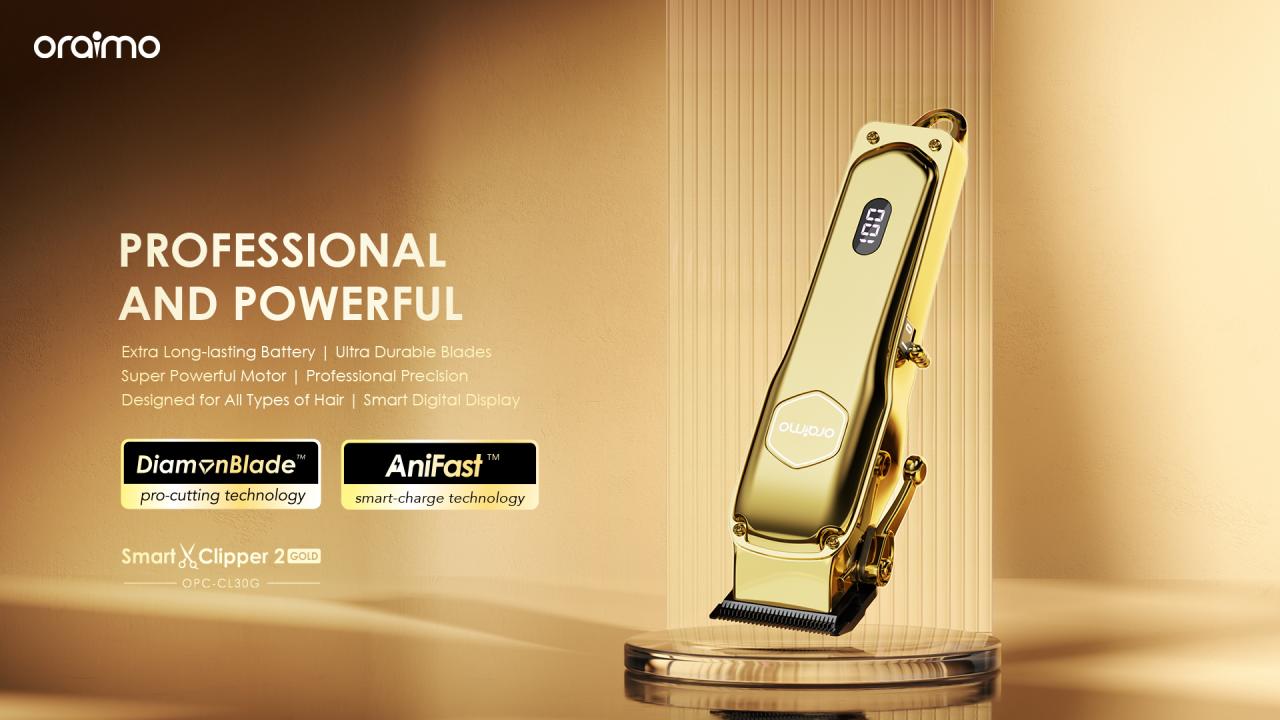
AI-powered hair clippers represent a significant leap forward in personal grooming technology. By integrating intelligent sensors, automatic blade adjustment, and user-friendly apps, companies like Glyde and Hairspace are turning the daunting task of cutting one’s own hair into a manageable and even enjoyable experience. While the technology is still in its early stages and not yet a perfect replacement for a skilled barber, it offers a compelling solution for those seeking convenience, cost-savings, and the empowerment of self-grooming .
As the technology matures, with more robust hardware, smarter AI, and vibrant user communities, these devices are poised to become a staple in homes worldwide. They are not just about cutting hair; they represent a broader trend of AI democratizing skills that were once considered the exclusive domain of professionals. The future of grooming is smart, automated, and in the hands of the user.