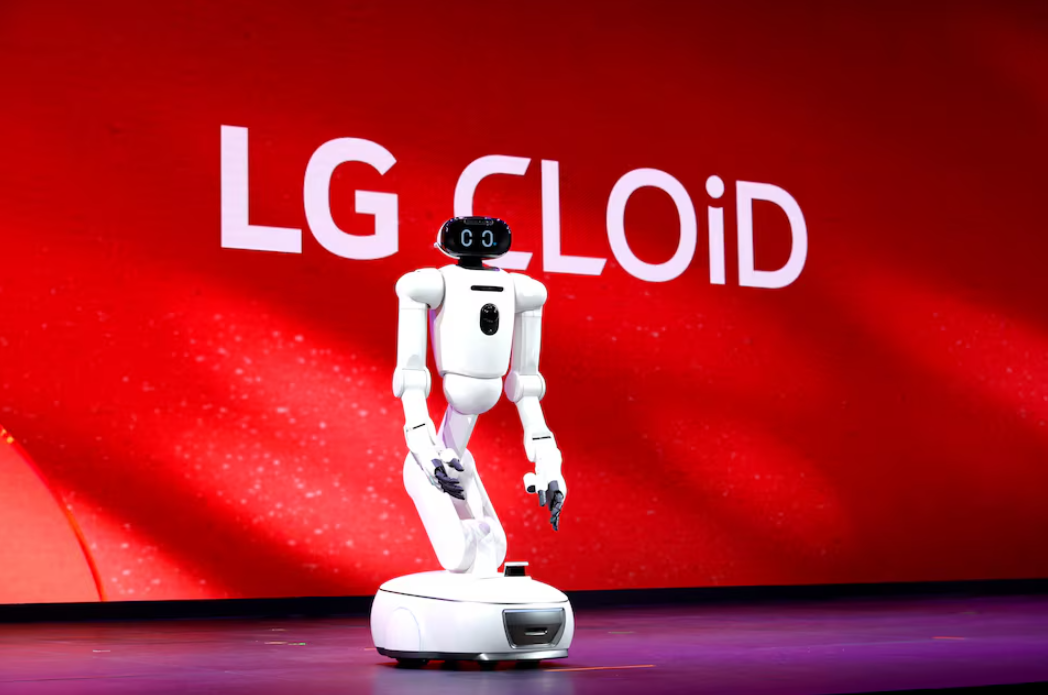
In an era where technology increasingly intertwines with daily life, the quest for complete home automation has taken a monumental leap forward. At the forefront of this revolution is the unveiling of a groundbreaking innovation that promises to redefine domestic life: the LG CLOiD laundry robot. For years, the concept of a robotic assistant capable of handling intricate household chores seemed like a distant future, confined to the realms of science fiction. However, with the official presentation of LG CLOiD at CES 2026, that future has officially arrived. This isn’t just another smart appliance; it is a sophisticated, AI-driven home companion designed to shoulder the burdens of mundane tasks, embodying LG’s ambitious “Zero Labor Home” vision .
This advanced humanoid robot is engineered to perform and coordinate various household tasks across connected home appliances. Its primary goal is to significantly reduce the time and physical effort required for everyday chores, marking LG’s latest development in AI-based home robotics and smart home platforms . The announcement, which captured the attention of tech enthusiasts and industry experts worldwide, signals a pivotal shift from connected devices to autonomous agents that actively manage our living spaces.
The Dawn of the Zero Labor Home
The concept of the “Zero Labor Home” is not just a marketing tagline but a foundational philosophy for LG’s recent innovations . It envisions a future where intelligent machines handle the repetitive and time-consuming chores that often consume personal time. LG CLOiD is the centerpiece of this vision, acting as a physical AI to manage daily housework. This initiative builds on LG’s existing smart home ecosystem, including the Self-Driving AI Home Hub (LG Q9) and the ThinQ platform, creating a seamless integration between the robot and other appliances .
The public demonstration at CES 2026 was pivotal, showcasing CLOiD’s ability to operate in diverse home environments . In one compelling scenario, the robot retrieved milk from a refrigerator and placed a croissant into an oven to prepare breakfast. After the household occupants left, LG CLOiD initiated laundry cycles and folded and stacked garments after drying . These scenarios were not just scripted tricks but demonstrations of the robot’s ability to understand lifestyle patterns and execute precise appliance control .
Design and Hardware: Form Meets Function
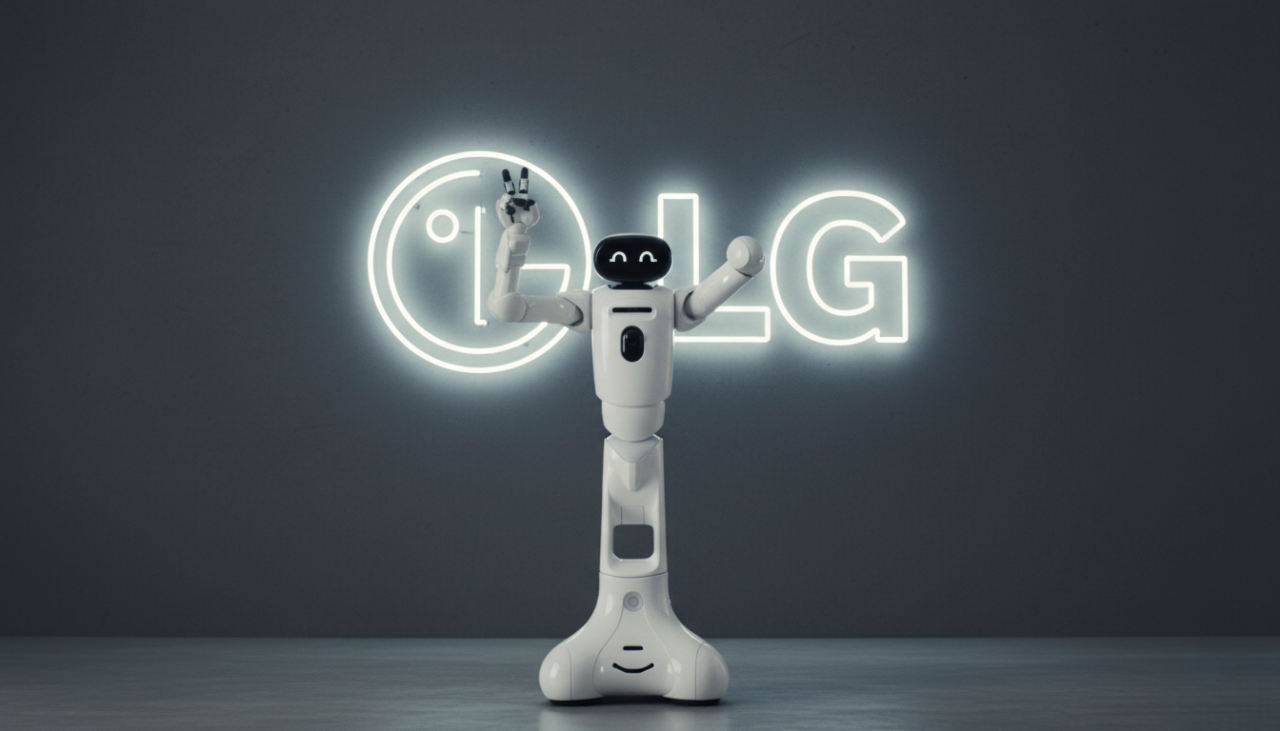
One of the most striking aspects of the LG CLOiD is its sophisticated yet approachable design. It moves away from the intimidating aesthetics often associated with humanoid robots, instead adopting a cleaner, more integrated look. The robot consists of a head unit, a torso with two articulated arms, and a wheeled base equipped with autonomous navigation .
The wheeled base is a strategic design choice. Instead of complex bipedal legs, LG opted for a stable, wheeled platform derived from its experience with robot vacuums . This form factor was selected for stability, safety, and cost-effectiveness. The low center of gravity reduces the risk of tipping if a child or pet makes contact, making it safer for real-world households . This focus on safety is a crucial element for consumer acceptance, as the robot is designed to operate in spaces where humans live and interact.
The torso adds further functionality, as it can tilt to adjust its height, enabling the robot to pick up objects from knee level and above . This flexibility is essential for interacting with various household items, from low-lying laundry baskets to countertop appliances.
The Robotic Arms: Precision Engineering
The true magic of LG CLOiD lies in its advanced robotic arms. Each arm boasts seven degrees of freedom, matching the mobility of a human arm . The shoulder, elbow, and wrist allow for forward, backward, rotational, and lateral motion, providing the dexterity needed for complex tasks. This articulation allows the robot to reach into tight spaces and move its arms in the fluid, multi-directional manner required for household work.
The hands are equally impressive, featuring five independently actuated fingers for fine manipulation . This design allows LG CLOiD to handle a wide range of household objects, from delicate glassware to heavy cookware. The ability to grasp, lift, and manipulate objects with such precision is what separates CLOiD from simpler robotic systems. The fine motor skills required to fold a shirt or unload a dishwasher are incredibly difficult to replicate in robotics, yet LG seems to have achieved a significant breakthrough with this design .
The Brain of the Operation: AI and Physical Intelligence
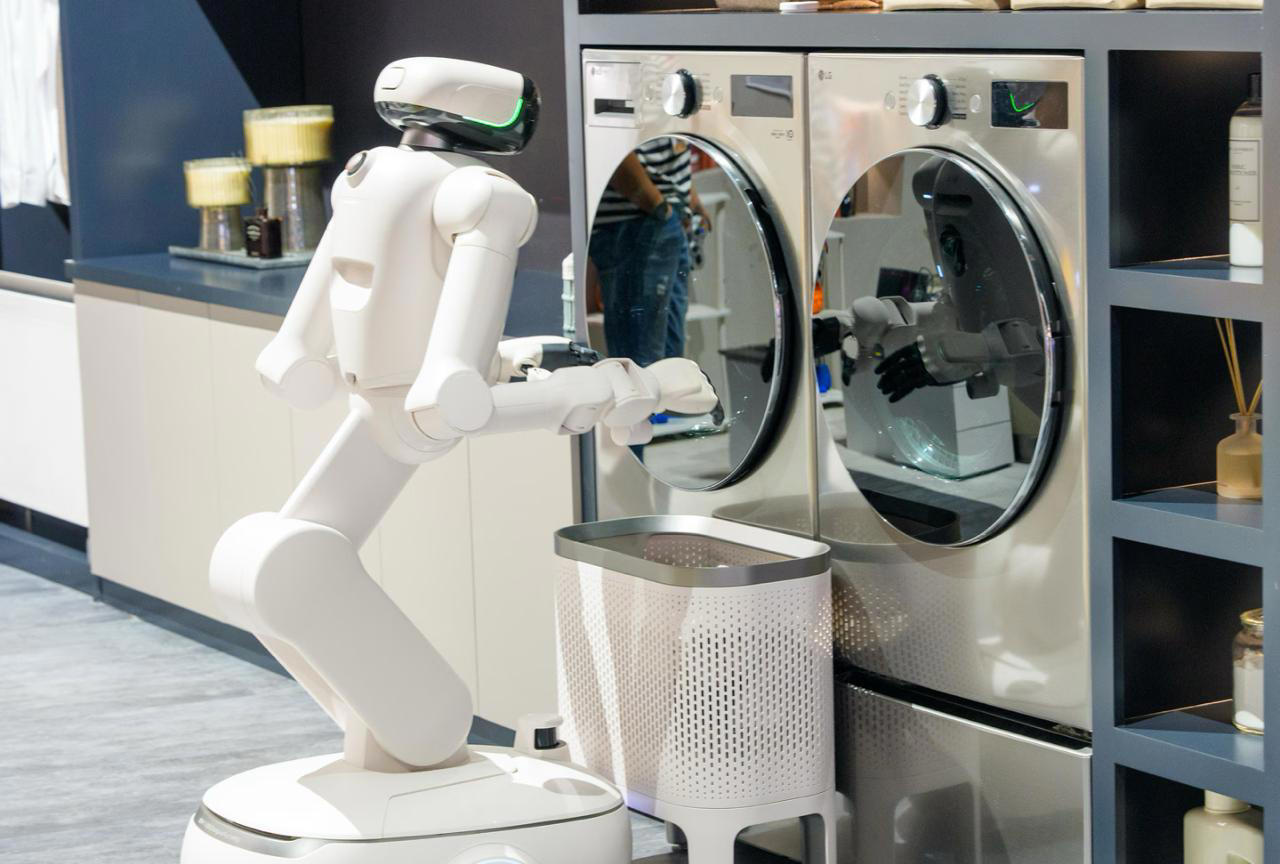
While the hardware is impressive, the true power of LG CLOiD lies within its “head.” The head functions as a mobile AI home hub, equipped with a chipset that acts as the robot’s brain, a display, a speaker, cameras, various sensors, and voice-based generative AI . Collectively, these elements allow the robot to communicate with humans through spoken language and “facial expressions,” learn the living environments and lifestyle patterns of its users, and control connected home appliances based on its learnings .
The integration of generative AI allows for natural language communication, making it easier for users to interact with the robot. The display showing “facial expressions” humanizes the robot, making it feel less like a machine and more like a helpful companion .
Understanding Physical AI
At the core of LG CLOiD is what LG calls “Physical AI” technology. This is where the robot’s cognitive abilities truly shine. Physical AI combines two key models:
A. Vision Language Model (VLM): This model converts images and video captured by the robot’s cameras into structured, language-based understanding. It allows CLOiD to “see” its environment and interpret what is happening .
B. Vision Language Action (VLA): This model takes the visual and verbal inputs and translates them into physical actions. It is the engine that allows the robot to go from understanding a command like “tidy the kitchen” to executing the specific physical motions required .
These models have been trained on tens of thousands of hours of household task data . This extensive training enables LG CLOiD to recognize appliances, interpret user intent, and execute context-appropriate actions, such as opening doors or transferring objects. It learns the subtle cues of a household—how you like your clothes folded, where items are typically stored—and adapts its behavior accordingly.
Beyond Laundry: A Multi-Functional Assistant
While the laundry-folding feature has garnered significant attention, LG CLOiD is designed to be a versatile home assistant capable of much more. The demonstrations at CES 2026 highlighted a range of tasks, including:
A. Kitchen Assistance: The robot can retrieve items from the refrigerator, place food in the oven, and prepare simple meals like breakfast .
B. Dishwashing and Cleaning: CLOiD can unload the dishwasher and assist with general kitchen cleanup .
C. Serving: It can carry plates of food and serve meals to household members .
D. Smart Home Management: By integrating with the ThinQ ecosystem, the robot can orchestrate other smart devices, managing lighting, temperature, and more .
This ability to perform a diverse array of tasks highlights the potential for CLOiD to become a central figure in the smart home ecosystem. It is not just a specialized machine but a general-purpose assistant that learns and adapts to the needs of its users .
The Strategic Importance of Actuators
Alongside the home robot, LG introduced LG Actuator AXIUM, a new brand of robotic actuators for service and robotics applications . An actuator is essentially a robot’s joint, integrating a motor that generates rotational force, a drive that controls electrical signals, and a reducer that regulates speed and torque . These are considered one of the most critical and cost-intensive components in robotics and are widely regarded as a strategic upstream technology in the era of Physical AI .
By developing its own high-quality actuators, LG is positioning itself not just as an appliance manufacturer but as a key player in the robotics supply chain. This vertical integration allows LG to maintain quality control, optimize performance, and potentially reduce costs as it scales production of robots like CLOiD . The actuator technology is designed to be energy-efficient, even utilizing regenerative braking to recharge the battery, showcasing LG’s commitment to innovative engineering .
The Future of Home Robotics
As of 2026, LG CLOiD represents a significant milestone in consumer robotics. It signals a move beyond voice-activated assistants and smart speakers to physical agents that actively manipulate their environment. However, challenges remain, including cost, market readiness, and the ability to handle the unstructured nature of a typical home. The current price predictions for commercial models are high, and the technology will need to prove its reliability and practicality in real-world settings .
Despite these challenges, the potential of LG CLOiD is immense. It represents the convergence of AI, robotics, and smart home technology into a single, cohesive unit. It promises not just convenience but a fundamental shift in how we approach domestic life. This unveiling is the beginning of a journey toward truly autonomous homes, where technology serves us not as a tool, but as a partner in managing the complexities of modern living.
Conclusion
In conclusion, the unveiling of the LG CLOiD laundry robot marks a transformative moment in smart home technology. It transcends the capabilities of existing robotic vacuums and smart assistants by offering physical intelligence and dexterity. With its sophisticated design, advanced AI, and integration with the ThinQ ecosystem, CLOiD embodies LG’s “Zero Labor Home” vision. It showcases a future where intelligent machines handle mundane chores, allowing individuals to reclaim valuable time. While significant hurdles remain in terms of cost and mass adoption, the LG CLOiD is a powerful testament to the direction of home technology a future where our homes are not just connected but actively managed by autonomous, intelligent robots. This is more than just a robot; it is a glimpse into the future of living.