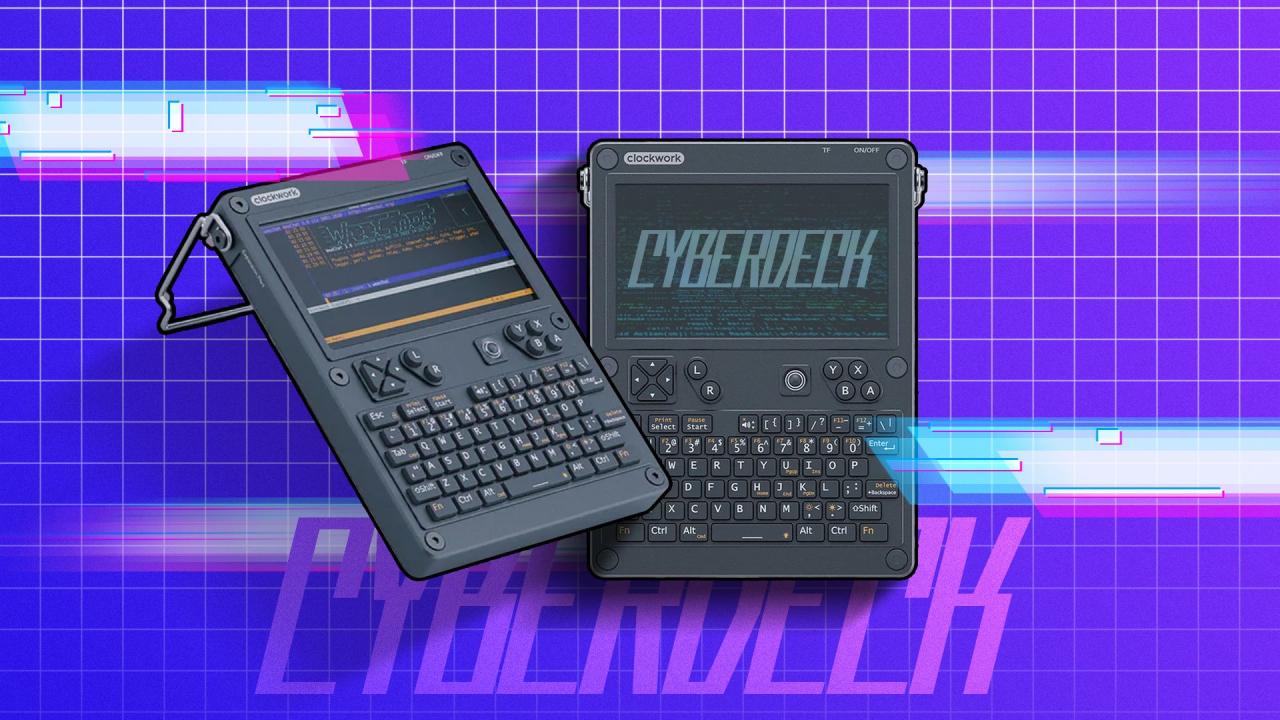
The year is 2026, and a fascinating trend has captured the imagination of the internet. It is not a new smartphone or a sleek, ultra-thin laptop. Instead, people are turning to building their own quirky, highly personalized portable computers known as cyberdecks . These machines, often cobbled together with single-board computers like the Raspberry Pi, recycled parts, and a healthy dose of creativity, are exploding in popularity . They represent a powerful cultural shift away from the polished, uniform devices offered by Big Tech and a bold step toward digital sovereignty, personal expression, and the sheer joy of making something with your own hands .
What Exactly is a Cyberdeck?
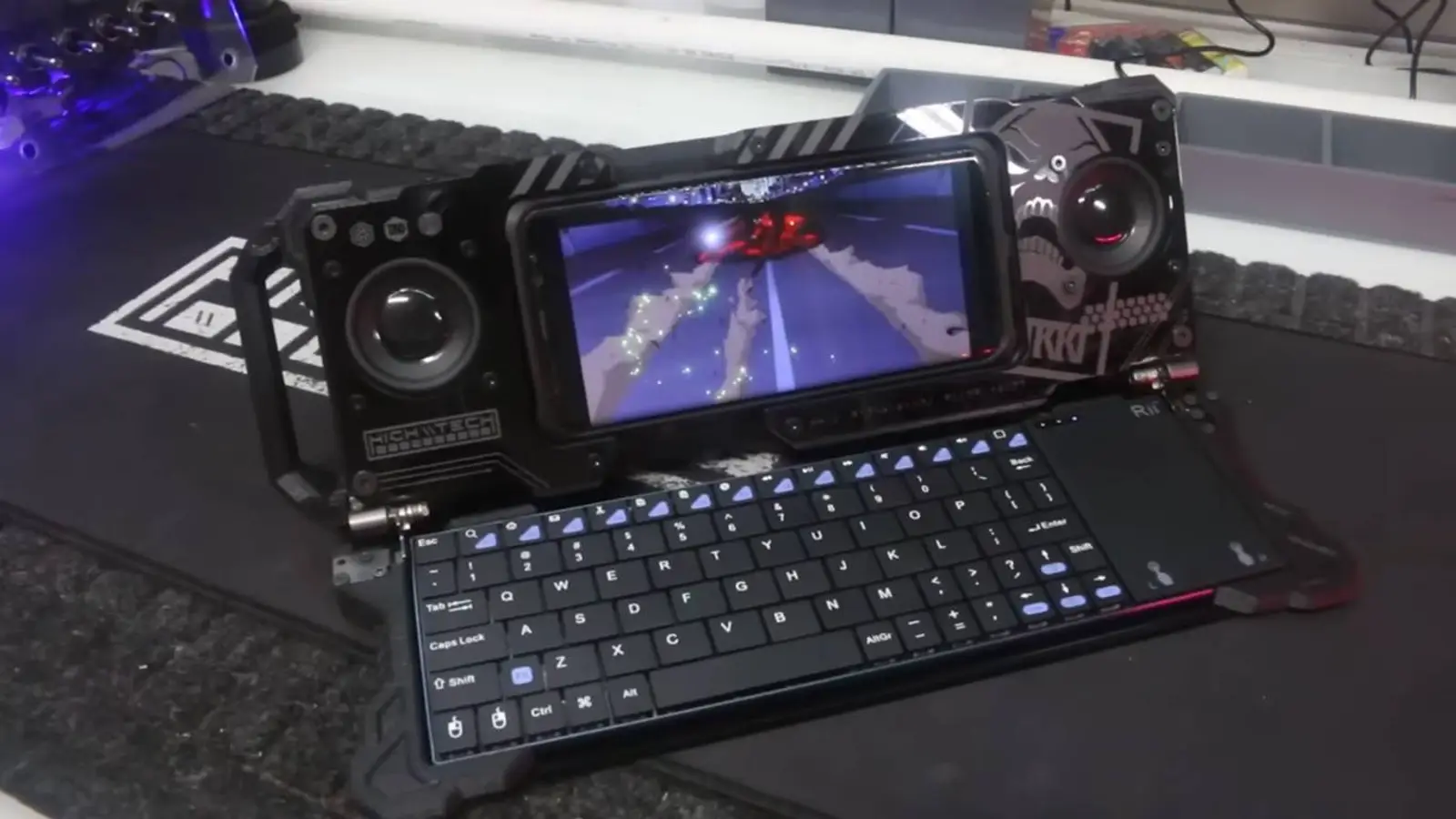
To misunderstand a cyberdeck is to dismiss it as a weird laptop cosplay. It is usually stranger than a laptop and more practical than cosplay. A cyberdeck is a custom-built portable computer, often constructed around a small board computer like a Raspberry Pi, and designed around one person’s exact priorities and aesthetic preferences . This is the core of its appeal. Unlike mainstream laptops, which are increasingly powerful, polished, and interchangeable, a cyberdeck is a machine that is meant to be shaped by its user .
The term itself originates from William Gibson’s seminal 1984 cyberpunk novel “Neuromancer,” where it described a powerful, futuristic interface device used by console cowboys to hack into global data networks . For decades, it remained a niche concept, a holy grail for sci-fi fans and hardware tinkerers. However, with the advent of affordable, credit-card-sized computers, the barrier to entry vanished, and the dream of building a real-life cyberdeck became a tangible reality for hobbyists .
The 2026 Viral Explosion
While the cyberdeck community has existed in places like Reddit’s r/cyberDeck for years, 2026 marked its breakthrough into the mainstream. The catalyst for this explosion can be traced back to a single TikTok creator, Anikke Tan (@ubeboobey), whose videos of her “mermaid cyberdeck” went viral . This wasn’t a rugged, military-style computer in a Pelican case. It was a functional computer built inside a repurposed, elegant purse, complete with seashell motifs and a distinctly whimsical aesthetic .
This single video sparked a movement. Suddenly, millions of people saw that a cyberdeck didn’t have to be a cold, industrial-looking piece of tech. It could be a work of art . The trend rapidly evolved from its traditionally masculine, cyberpunk roots into a more diverse and inclusive space. Women, in particular, began building and sharing their own creations, documenting the process to teach others and foster a community that had long been missing from tech culture .
Why the Sudden Fascination?
The rise of the cyberdeck trend in 2026 is not just about a cool aesthetic. It is a reaction to several converging cultural and technological currents. People are tired of all-purpose devices that add more distractions, telemetry, and subscription logic with each update . They are also experiencing a wave of nostalgia for hardware that feels tactile, repairable, and understandable .
Rejecting Big Tech’s Homogeneity
One of the strongest drivers of the cyberdeck movement is a direct rejection of the omnipresent homogeneity of Big Tech . Consumers are becoming increasingly aware that they have very little control over the devices they own. As one creator, CC, pointed out, if you try to jailbreak or modify a $1,000 smartphone that you legally own, you instantly void the warranty . This sentiment fuels a desire for “technological sovereignty,” where users regain control over their hardware and software .
Cyberdecks offer this control. You choose the screen, keyboard, battery, case, ports, and operating system because the machine is supposed to express a point of view . This is a practical protest against the surveillance, planned obsolescence, and centralized control of large technology platforms . Many cyberdecks are designed to function offline, prioritizing local storage and reducing dependence on the cloud and constant internet connectivity .
The Joy of the Arts and Crafts of Computing
Beyond the ideological statements, there is a powerful, joyful, and creative element to the trend. The internet has seen an explosion of “arts-and-crafts-ification of computing” . Creators are building cyberdecks from almost anything with enough space for a single-board computer and a screen . This includes purses, jewelry boxes, toys, old tech, Dunkin’ Donuts munchkin boxes, Pokeballs, and even moss-covered 3D-printed fossils .
This new movement emphasizes upcycling and recycling. Creators are using thrifted or repurposed parts, turning what would be e-waste into functional, beautiful objects. For instance, Maro Vardanyan, a blockchain developer, creates “macrame motherboards,” weaving pink Raspberry Pis into purses and corsets with conductive thread, connecting her work to the history of textile arts and early computing . This artistic angle has made the hobby more accessible, proving you don’t need a background in engineering to build something amazing .
The Purpose and Diversity of Modern Cyberdecks

A common misconception is that a cyberdeck is a toy or a prop. While some builds are purely aesthetic, the majority are designed with a specific, practical use case in mind . The best cyberdecks are “opinionated” . They make trade-offs to excel at a particular job, a philosophy that contrasts sharply with the “one size fits all” approach of mainstream laptops.
Popular Use Cases
The diversity of cyberdecks is reflected in their many applications:
A. For Field Work and Technical Tasks
Many cyberdecks are built as rugged, portable terminals for professionals. System administrators and developers build them as compact Linux machines for mobility and technical work . They are also popular in ethical hacking and pentesting, serving as self-contained, secure tools for running scripts and diagnostics .
B. For Software-Defined Radio (SDR)
One of the most popular sub-genres is the SDR cyberdeck. Projects like the “Lambda Cyberdeck 910” by CodyTolene transform a compact case into a powerful, portable radio computer. These builds often feature a Raspberry Pi, a 7-inch display, and an RTL-SDR dongle, allowing the user to tune into a wide range of radio frequencies and analyze signals .
C. For Distraction-Free Writing
Known as “writerdecks,” these builds are optimized for comfort and battery life, creating a zen-like environment for focused writing. They often feature high-quality mechanical keyboards, e-paper or high-contrast displays, and a minimal operating system to eliminate distractions .
D. For Retro Gaming
The HackberryPi and similar projects reimagine Raspberry Pi Zero 2W devices as portable gaming rigs for emulating classic console games . The Decktrix is another example, focusing on a compact, modular handheld design with a universal connector for attaching various modules .
E. For Education and STEM
The RPI DEV from Sector07 is a fantastic example of an educational cyberdeck. It is a modular, open-source, dual-screen development platform designed to be used as a mobile lab for programming and prototyping. It features external GPIO and I2C ports, making it ideal for teaching electronics and robotics .
The Spectrum of Builds: From Rugged to Whimsical
The modern cyberdeck scene is defined by its diversity. It ranges from highly functional, utilitarian builds to whimsical, artistic creations. A classic example of the former is Jake-Simek’s “Pelican-Deck,” which is built into a rugged, water-resistant Pelican 1150 case and is designed for running BadUSB scripts and cybersecurity tasks . At the other end of the spectrum are creations like Sarahbelle Kim’s tiny shell or the Strawberry Shortcake-themed cyberdecks, which prioritize personal expression and fun .
Practical Guide: Building Your First Cyberdeck
The explosion in popularity has made building a cyberdeck easier than ever. While the internet is full of incredibly complex and intricate builds, a first project can be surprisingly straightforward. The key to a successful build, according to seasoned makers, is to start with a clear purpose .
A. Defining Your Purpose
Ask yourself: What job do you want this machine to do better than a normal laptop? The answer will guide all your subsequent decisions.
-
A writing deck: Prioritizes comfort, a good keyboard, and long battery life.
-
A field diagnostics deck: Needs multiple ports, durability, and a rugged case.
-
A reading/research deck: Might use an e-paper display, compact storage, and a layout for one-handed use .
B. Choosing Your Hardware
Once you have a purpose, you can select your components. A typical beginner build starts with a single-board computer (SBC), a display, a keyboard, a power source, and a case .
-
The Brain: The Raspberry Pi is the most popular choice. Models like the 3B+ are favored for their lower cost and power consumption for terminal-based tasks, while the Pi 4 and Pi 5 offer more power for GUI-heavy projects .
-
The Display: IPS panels in sizes from 4.3″ to 10″ are common. For the Lambda Cyberdeck, a 7-inch HDMI LCD display is recommended .
-
The Keyboard: Mechanical or compact Bluetooth keyboards are popular. The Logitech Pebble Keys 2 K380s is a common choice due to its portability .
-
The Power: A USB power bank is the easiest way to provide portable power, with capacities ranging from 37 Watt-hours for all-day use .
-
The Case: This is where creativity shines. Options range from 3D-printed custom enclosures (like the “Bumble Berry Pi”) to rugged Pelican cases and repurposed purses or jewelry boxes .
C. Following a Proven Build Plan
For a first-time builder, following a well-documented plan is highly recommended. The open-source community provides free resources, including parts lists, 3D-printable STL files, and detailed assembly instructions.
| Project Name | Key Hardware | Core Feature | Cost & Complexity |
|---|---|---|---|
| Bumble Berry Pi | Raspberry Pi (3B+ or newer), 4.3″ Touch Screen, Mini Bluetooth Keyboard, USB Power Bank | Designed to be cheap, small enough for a pocket, and very quick (~5 minutes) to assemble. | ~$60 for parts (excluding Pi). Beginner-friendly. |
| Lambda Cyberdeck 910 | Raspberry Pi 4, 7″ HDMI LCD, Logitech Pebble Keys 2, Nanuk 910 Case | Rugged build, highly documented, oriented for SDR and general computing. | Parts ~$300+. 3D-printed parts take 72+ hours to print. Intermediate. |
| Pelican-Deck | Raspberry Pi 4, 7″ Display, Pelican 1150 Case | Rugged, water-resistant, designed for cybersecurity, includes cooling fans. | Moderate. Assembly requires some soldering and 3D printing. |
| RPI DEV | Raspberry Pi 4/5, Two 9″ Touchscreen Displays, Custom PCBs | A development platform with a snap-fit design, external GPIO, and programmable buttons. | Expensive and complex. Requires advanced soldering skills. |
D. The Role of Software and Open Source
The cyberdeck community is built on the principles of open-source software and hardware. Almost all cyberdecks run a version of Linux, with Raspberry Pi OS being the most common starting point. For more specialized tasks, such as ethical hacking, Kali Linux is a popular choice . The open-source ethos is what makes the movement so powerful: anyone can download files, modify designs, and contribute to the collective knowledge .
The Real Appeal is Control
The cyberdeck trend matters because it says something larger about this moment in computing. People are not only shopping for performance. They are shopping for control, texture, and limits they chose for themselves .
That does not mean cyberdecks will replace laptops. They do not need to. Their role is to remind people that a computer can still feel specific. In 2026, that alone is enough to make a homemade machine feel unexpectedly fresh . They represent a vibrant, creative, and often political response to a world of homogenous tech, proving that the most powerful computer is one that you built yourself.