
The world of home robotics has reached a pivotal moment. For years, the dream of a truly autonomous home cleaning system has been hampered by a single, frustrating obstacle: the staircase. Countless robot vacuum owners have experienced the annoyance of carrying their device upstairs to complete a simple cleaning task, effectively negating the “set it and forget it” promise of the technology. At CES 2026, Roborock, a global leader in smart cleaning solutions, has unveiled an ambitious answer to this age-old problem. The company introduced the Saros Rover, a revolutionary robot vacuum that is the first of its kind to feature a wheel-leg architecture specifically designed to climb stairs, slopes, and other complex terrain. This isn’t just an incremental update; it’s a fundamental rethinking of what a robot vacuum can be, potentially transforming how we maintain multi-story homes. While still in development, the Saros Rover signals a bold new direction for the industry, pushing the boundaries of mobility and artificial intelligence.
The Engineering Marvel Behind the Climb
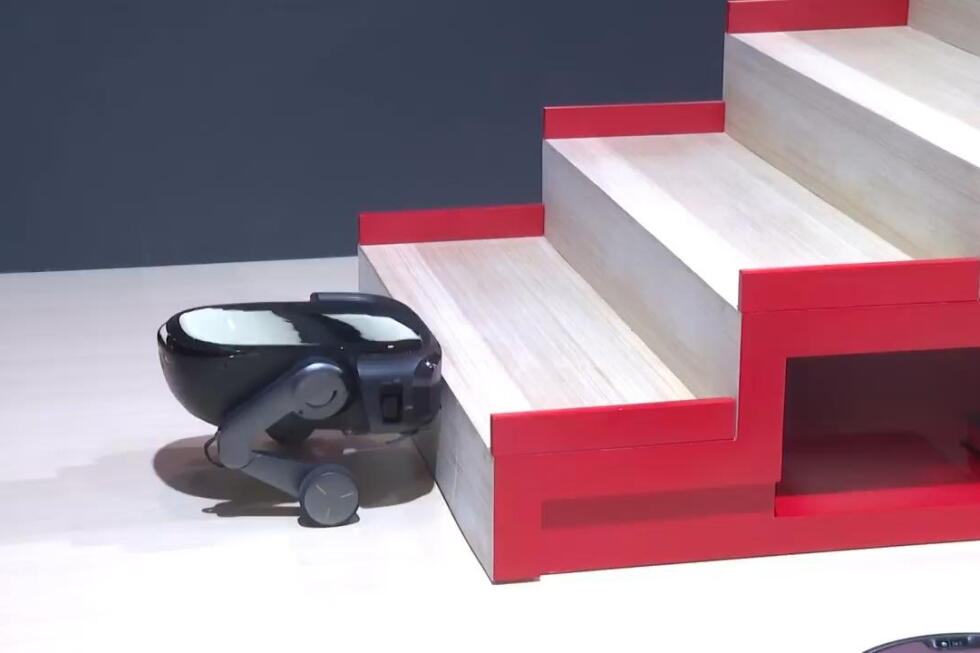
The magic of the Saros Rover lies in its departure from the traditional, low-profile circular design that has defined robot vacuums for over two decades. Instead, it utilizes a unique mechanical system known as the AdaptiLift Chassis 3.0, which incorporates two articulated limbs, or “wheel-legs”. These aren’t just for show; they represent a significant leap in engineering and robotics. Each leg is powered by independent motors and is equipped with a wheel at its base, allowing for a combination of rolling efficiency on flat surfaces and walking-like agility when encountering obstacles.
This wheel-leg system allows the Saros Rover to mimic human mobility in a way that is truly unprecedented for a consumer appliance. It can raise and lower each leg independently, allowing it to balance, pivot, and even perform small jumps to clear thresholds. The ability to hop, while perhaps sounding like a novelty, is a critical function that enables the robot to quickly navigate complex multi-level room dividers or small gaps that would leave a standard vacuum spinning helplessly. In live demonstrations at CES, the Saros Rover showcased its stability and control, gracefully navigating a slope and performing a “bunny hop” at the bottom, highlighting its dynamic balancing capabilities. During a test of its durability, the robot was struck with tennis balls to simulate bumps from pets or children and successfully recovered its balance without tumbling over.
A.I. and Spatial Awareness: The Brain Behind the Brawn
The Saros Rover’s physical capabilities are only half the story. Its impressive mobility is orchestrated by a sophisticated software suite powered by artificial intelligence (AI). The robot is equipped with complex motion sensors and advanced 3D spatial information systems that allow it to understand its environment in real-time. This isn’t just about avoiding walls and furniture; it’s about predicting changes in terrain and adjusting its leg movements accordingly.
As the Saros Rover navigates a home, its sensors generate a 3D map of its surroundings. The AI algorithms process this data to identify potential obstacles, determine the best path, and precisely coordinate the movement of its legs to maintain balance while transitioning between different floor heights. This ensures that the robot remains stable and level, even when climbing a curved staircase or navigating a steep slope. The system can distinguish between a flat surface, a door threshold, a ramp, and a staircase, automatically switching from its energy-efficient wheeled mode to the more dynamic leg-based mode as needed. This deep integration of hardware and software is what makes the Saros Rover’s feats of navigation possible, turning a potential gimmick into a practical and intelligent tool.
Tackling the Ultimate Challenge: Staircase Cleaning
The primary function and main selling point of the Saros Rover is its ability to climb and clean stairs. During a live demonstration at CES, the robot flawlessly ascended a flight of five stairs, a process that took approximately 30 to 40 seconds. The action is both methodical and mesmerizing. To climb, the Rover places one wheel-leg onto the higher step, using it as a brace while it pivots and slides its body upward. It then brings the second leg up to join the first, effectively “walking” up the staircase step-by-step.
What is perhaps more impressive is that the Saros Rover doesn’t just climb the stairs; it cleans them as it goes. As it ascends or descends, it moves along each individual step, vacuuming the surface before proceeding to the next. This feature effectively eliminates the “stair gap,” a term used to describe the no-go zone that has plagued robot vacuums for years. Roborock claims the Saros Rover is designed to handle a wide variety of architectural features, including not just traditional, straight staircases but also more complex designs like spiral staircases and carpeted stairs with bullnose fronts. This adaptability is crucial for its real-world utility, as many homes feature staircases that are far from a simple straight line.
Current Limitations and Future Potential
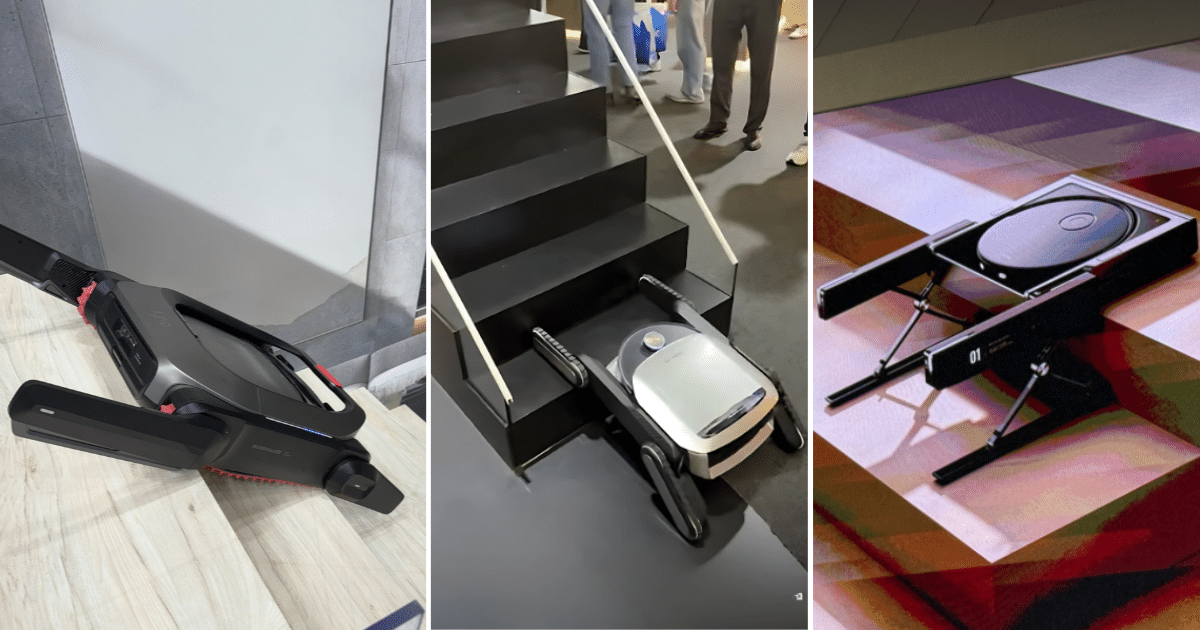
Despite its revolutionary design, the Saros Rover is not without its limitations. Roborock has confirmed that the current version of the Rover is a vacuum-only device; it does not possess a mopping system. For a company whose flagship models have increasingly focused on powerful two-in-one vacuuming and mopping capabilities, this is a notable departure. However, a company representative has stated they are still working on determining which of their mop systems could be integrated into the Rover’s unique chassis or whether they will develop an entirely new system for it. This suggests that a future version of the Rover could incorporate mopping, but it may be some time before that is realized.
Another significant factor is the price. The Saros Rover features highly advanced mechanical components, and this sophistication is expected to be reflected in its cost. While Roborock has not announced an official retail price or a release date for the Rover, industry speculation suggests it will be positioned at a premium price point, potentially exceeding $2,000, putting it in a similar bracket to the company’s own Saros Z70, which features a robotic arm. It is important to note that the Saros Rover is a real product in active development, not just a concept, but its launch timeline remains unconfirmed. The company appears to be taking a cautious approach to commercialization, possibly learning from the mixed reception of its earlier innovative but somewhat limited Saros Z70 robotic arm model.
A Broader Lineup: The Saros 20 and Qrevo Curv 2 Flow
While the Saros Rover captured the headlines at CES 2026, Roborock also unveiled a series of other new products that showcase the breadth of its innovation and its commitment to improving the existing robot vacuum experience. These models are designed for consumers who may not need a stair-climbing robot but still want cutting-edge performance and autonomy in their cleaning devices.
Roborock Saros 20 and Saros 20 Sonic:
For those seeking top-tier performance on a single floor, the Saros 20 and Saros 20 Sonic are the successors to the highly successful Saros series. A key feature of these models is the AdaptiLift Chassis 3.0 system, which allows them to navigate over high thresholds and thick carpets with ease. They can lift themselves over obstacles up to 8.8cm (approximately 3.5 inches) in height, effectively dealing with double-layered thresholds that would stop older robots dead in their tracks.
These hybrid models are also cleaning powerhouses, boasting a remarkable 35,000Pa of suction power, representing a massive leap in cleaning capability for the Saros line. The Sonic variant features a high-frequency, vibrating mop pad that can apply significant pressure to scrub stubborn stains, while the standard Saros 20 uses dual spinning mop pads. Both models are maintained by the new RockDock, which washes the mop with water heated to 212°F, a high enough temperature to effectively kill bacteria and break down grease, and then dries it to prevent odors.
Roborock Qrevo Curv 2 Flow:
For a more accessible price point, Roborock introduced the Qrevo Curv 2 Flow at a promotional price of $849. This model differentiates itself with a new roller mop design specifically engineered for hard floors. The roller mop spins at high speeds and applies pressure to clean deeply while automatically refreshing itself to ensure it is always using clean water. This design also helps to reduce water streaks on the floor. Like the Saros models, it features a self-cleaning and drying dock for a truly hands-free experience. It is an evolution of the Qrevo Curv models that were previously shown, solidifying Roborock’s commitment to offering a wide range of capabilities and features to suit different budgets and home types.
Conclusion: A New Frontier for Home Robotics
The unveiling of the Roborock Saros Rover marks a significant milestone in the evolution of home cleaning technology. By daring to solve the “stair gap,” Roborock has addressed one of the last and most persistent barriers to fully automated, whole-home cleaning. The robot’s innovative wheel-leg architecture, combined with powerful AI and advanced sensors, represents a genuine engineering breakthrough that could reshape consumer expectations for decades to come.
While the Saros Rover is not yet available for purchase and will undoubtedly command a high price when it arrives, its impact is already being felt. It pushes the entire industry forward, signaling that the future of robot vacuums is one of greater mobility, adaptability, and intelligence. Alongside the impressive new Saros 20 models and the Qrevo Curv 2 Flow, Roborock has demonstrated that it is not only a leader in the home robotics space but also a company willing to take bold risks to realize its vision of a truly automated home. The Saros Rover is, without a doubt, one of the most exciting and ambitious devices to come out of CES 2026, and it will be fascinating to see how it, and its inevitable competitors, evolve in the coming years.