
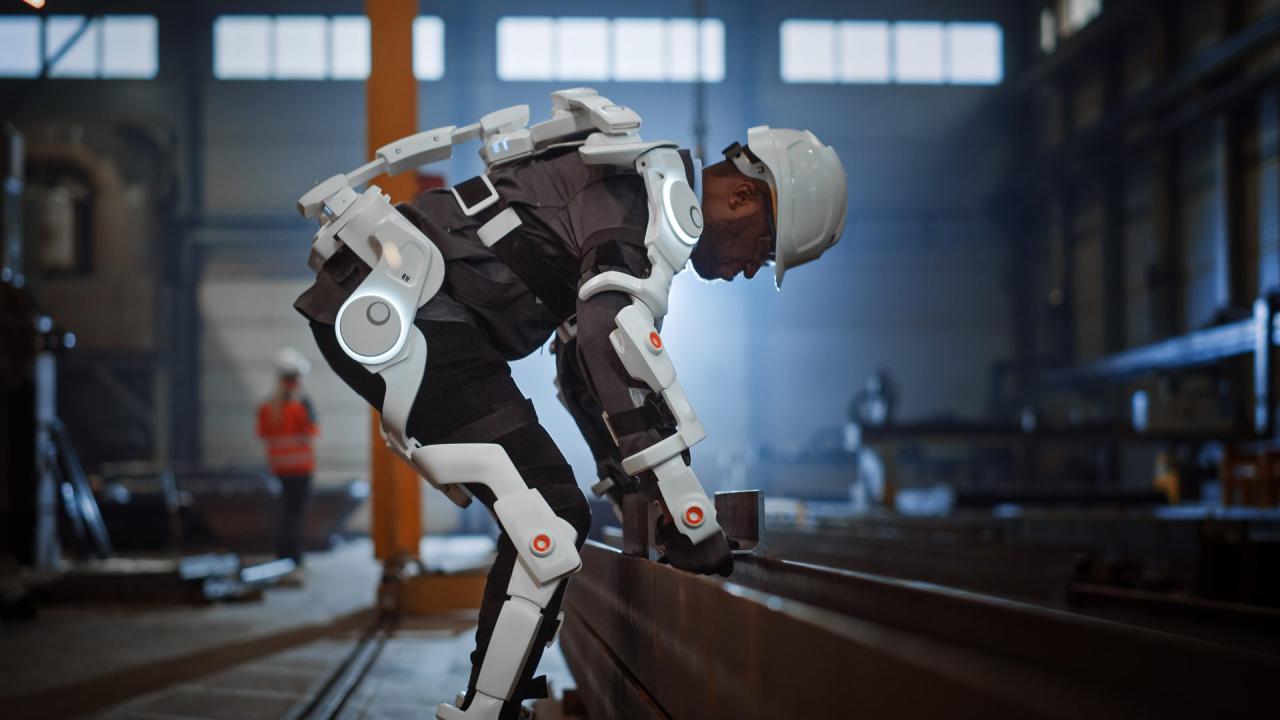
The quest to augment human physical capabilities has been a persistent thread throughout history, from the invention of the simple lever to the complex machinery of the industrial age. Today, this ambition is manifesting in one of the most exciting fields of modern engineering: wearable robotics, more commonly known as exoskeletons. Once confined to the realms of science fiction, exoskeletons are rapidly becoming a tangible reality, poised to revolutionize industries, redefine rehabilitation, and push the boundaries of human performance. These devices, worn on the body, are designed to assist, support, or augment movement, offering a powerful solution to challenges ranging from physical labor to neurological rehabilitation.
The technology, which integrates biomechanics, material science, robotics, and artificial intelligence, is no longer nascent. Tens of thousands of workers worldwide are already using exoskeletons in demanding jobs, and clinical trials are demonstrating unprecedented results in patient recovery. This article explores the multifaceted impact of exoskeletons on physical performance, from the factory floor to the rehabilitation clinic, examining the mechanics, benefits, and the profound implications they hold for the future of human work and health.
The Science and Mechanics of Performance Enhancement
To understand how exoskeletons boost physical performance, it is essential to understand the fundamental problem they solve: the inherent limitations of the human body, particularly in the face of fatigue and injury. The human musculoskeletal system, while remarkable, is susceptible to strain, overuse, and weakness. Exoskeletons act as a force multiplier, working in concert with the user’s muscles to reduce the load on the body. They function by applying external forces to the body’s joints, effectively sharing the burden of physical tasks.
There are two primary classifications of exoskeletons: passive (or elastic) and active (or powered). Each achieves performance enhancement through distinct mechanisms.
Passive exoskeletons are unpowered devices that rely on mechanical elements like springs, levers, and dampers. They do not contain motors or batteries but instead use these mechanisms to store and release energy. For example, when a worker bends down to lift a heavy object, a passive back exoskeleton might store energy in its spring mechanism. As the worker stands up, the spring releases this energy, providing a lifting boost that reduces the strain on the lower back muscles and the spine . This mechanical advantage works based on the principles of leverage and energy storage, making tasks like repetitive lifting or holding heavy tools significantly less tiring. The simplicity of passive exoskeletons makes them lightweight, reliable, and cost-effective.
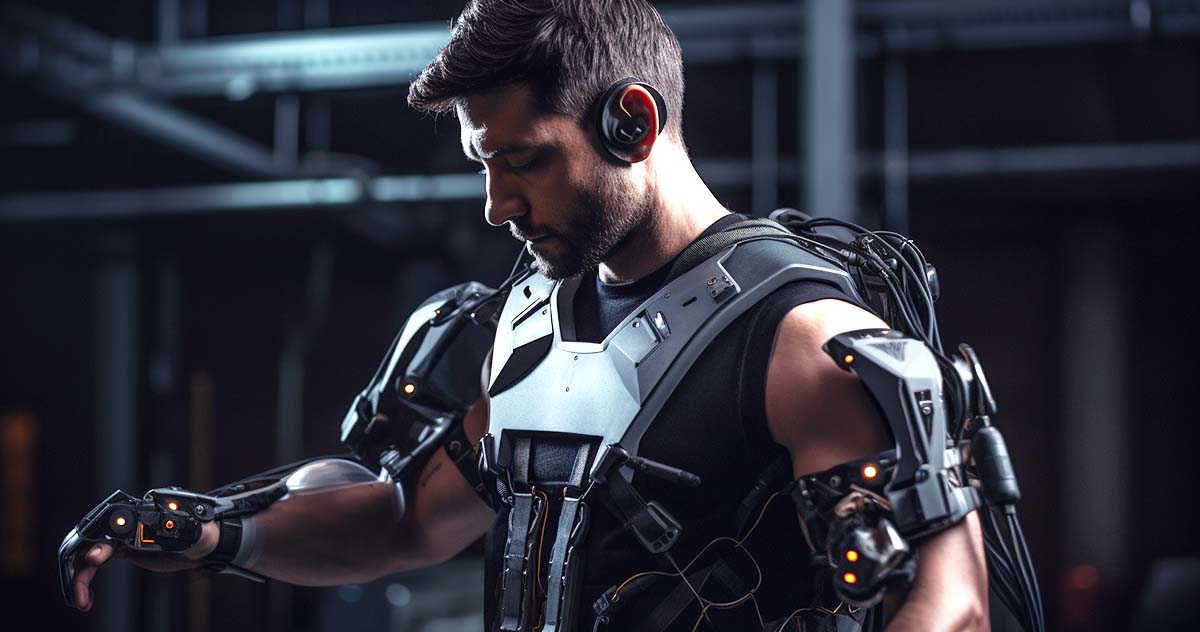
Active exoskeletons are far more sophisticated and represent the cutting edge of the field. These are, in essence, wearable robots equipped with motors, batteries, sensors, and onboard computers . They are capable of generating assistive forces and require a control system to operate. The true power of active exoskeletons lies in their ability to sense the user’s movements and intentions and respond with precise, adaptive support.
The most advanced active exoskeletons are now incorporating artificial intelligence (AI) to learn and adapt to an individual user’s unique movement patterns. For instance, devices like German Bionic’s Exia utilize an AI “brain” to build a form of machine-based muscle memory . Over time, the exoskeleton predicts the user’s movements with increasing accuracy, delivering the optimal level of physical support at the perfect moment. This ensures that the exoskeleton feels like a natural extension of the body, providing the most benefit without interfering with the user’s freedom of motion.
Industrial Applications and Occupational Benefits
The most immediate and widespread application of exoskeleton technology is in the industrial and occupational sectors, where physical strain is a leading cause of workplace injury. Work-related musculoskeletal disorders, such as back pain and shoulder injuries, account for a significant percentage of all workplace injuries in the United States, costing billions of dollars annually in lost productivity and worker’s compensation . Exoskeletons offer a proactive solution to this problem by reducing the biomechanical load on workers before injuries can occur .
The benefits are demonstrable across a variety of tasks. In manufacturing and logistics, where workers regularly lift heavy objects and perform repetitive motions, exoskeletons provide crucial support. For example, soft, air-powered elbow exoskeletons like the Pneumatically Actuated Soft Elbow Exoskeleton (PASE) developed by the University of Texas at Arlington have been shown to significantly reduce muscle activity in the biceps and triceps during lifting and assembly tasks. In a controlled study, participants using the PASE exoskeleton experienced up to a 22% decrease in muscle activity and reported a substantial reduction in perceived workload .
This translates to tangible outcomes: workers can perform tasks with less fatigue, maintain higher quality over longer shifts, and go home with more energy. To understand the breadth of these applications, consider the following categories of occupational exoskeletons and their specific functions:
A. Upper-Limb and Shoulder Exoskeletons:
These devices are designed to support the arms during overhead work, such as in construction, painting, and electrical maintenance. By providing gravity compensation, they reduce the strain on shoulder muscles like the deltoids, helping to prevent rotator cuff injuries and chronic pain . Studies on passive shoulder exoskeletons have found that they can reduce muscle activity in the shoulder region by a significant margin, with some reports of reductions between 21.6% to 34% . The effectiveness can vary by task, with some exoskeleton models being better suited for static tasks and others for dynamic ones .
B. Back and Lower-Limb Exoskeletons:
These are the most common type for warehouse and logistics work, providing support during lifting, bending, and carrying. They work by transferring the load of heavy objects from the spine to the exoskeleton’s frame, often directing the force to the ground via leg structures or the wearer’s hips. Active models can provide dynamic assistance, adapting the support to the weight being lifted and the motion being performed. The Exia, for instance, can provide up to 38kg of dynamic assistance, making a 30kg object feel as light as 5kg to the user’s lower back .
C. Soft and Specialized Exoskeletons (Exosuits):
Modern exoskeletons are not always rigid metal frames. A significant advancement is the development of soft exoskeletons, or exosuits, which are constructed from flexible textiles and fabrics . These are lighter, more comfortable, and less restrictive than rigid models, making them ideal for tasks requiring a high degree of mobility. The PASE elbow exoskeleton is a prime example of a soft exoskeleton that uses soft pneumatics to provide assistance . There are also exoskeletons designed for specific tasks like gripping and tool use, as well as for soldiers, firefighters, and mountaineers .
The Clinical Revolution: Rehabilitation and Recovery
Beyond the industrial sector, exoskeletons are proving to be transformative tools in clinical rehabilitation, offering hope and tangible results for individuals with severe mobility impairments. The application of exoskeletons in medicine is a paradigm shift, moving beyond traditional physical therapy to provide high-intensity, task-specific training for patients with spinal cord injuries, stroke, cerebral palsy, and other neurological conditions.
The core principle is neuroplasticity the brain’s ability to rewire itself and form new neural connections. Robotic-assisted gait training (RAGT) using powered exoskeletons allows patients to practice walking in a safe, controlled environment, providing the repetitive, high-volume stepping practice that is essential for motor learning. By actively engaging the patient in the walking process, these devices stimulate the nervous system, potentially helping to restore lost motor functions.
The clinical evidence is compelling and growing. The benefits can be broken down into key areas:
A. Cardiovascular Health and Endurance:
For individuals with conditions like spinal cord injury (SCI), the inability to walk leads to a sedentary lifestyle with significant health risks, including cardiovascular disease. Exoskeletons can help mitigate these risks. A case study using the Atalante X exoskeleton, a self-stabilizing device that allows for hands-free walking, showed that a patient with a complete SCI could consistently achieve moderate-intensity cardiovascular exercise during exoskeleton-assisted training sessions . This is a significant breakthrough, as it demonstrates that passive exoskeleton-assisted walking can provide a sufficient aerobic workload to improve cardiovascular health . In a study involving youth with cerebral palsy, an intensive 8-week program of robotic-assisted gait training resulted in a statistically significant improvement in gait efficiency, as measured by a 43-meter increase in the distance walked during a 6-minute walk test .
B. Muscle Strength and Functional Mobility:
Exoskeletons, when used as resistive training tools, can be more effective than traditional strength training by promoting functional neuromuscular control in addition to strength. A pilot study on older adults (average age 76) demonstrated the powerful potential of this approach. Participants underwent 12 sessions of ankle exoskeleton resistance training over four weeks. The results were remarkable: they experienced a 38% increase in plantarflexor muscle strength, which is crucial for propulsion during walking. This strength increase translated directly into improved mobility, with a 13% increase in habitual walking speed and an 11% increase in six-minute walk test distances .
C. Postoperative Recovery and Gait Retraining:
Wearable exoskeletons are accelerating recovery after orthopedic and neurological surgeries. By enabling early mobilization, these devices help counteract the muscle atrophy and deconditioning that result from immobility . Meta-analyses have shown that exoskeleton-assisted therapy after total knee arthroplasty can lead to superior joint motion, functional recovery, and shorter hospital stays compared to conventional therapy . Devices like Japan’s Hybrid Assistive Limb (HAL) and Honda Walking Assist use real-time EMG or motion-sensor feedback to deliver personalized torque assistance, facilitating more natural and effective gait retraining .
The Future of Human Augmentation
The trajectory of exoskeleton technology points toward a future where these devices are not just specialized tools but commonplace aids, much like eyeglasses are today. This future is being shaped by several key innovations.
A. The Integration of Artificial Intelligence:
The integration of AI is perhaps the most significant trend. The “AI brain” of exoskeletons like the Exia represents a leap from simple assistive devices to intelligent partners. As these algorithms improve, exoskeletons will become even more intuitive and responsive, learning from the user’s movements to provide seamless support . This will be crucial for widespread adoption, particularly in applications that require complex, variable movements.
B. Advances in Materials and Design:
The shift toward soft exoskeletons made of lightweight, flexible materials is making the technology more comfortable and less obtrusive . This is essential for clinical populations who may be sensitive to rigid frames and for occupational workers who need to wear the device for long periods.
C. The Economic and Social Impact:
The economic potential is vast. In the U.S. alone, work-related musculoskeletal disorders cost an estimated $45-54 billion annually . By preventing injuries and improving worker endurance, exoskeletons can save businesses significant money while also improving the quality of life for their employees. Furthermore, the technology offers the promise of a more inclusive workplace, where people with age-related physical decline or disabilities can continue to perform demanding jobs.
D. Expanding Applications:
Research is also exploring novel applications, such as bio-hybrid robots that repurpose crustacean exoskeletons as sustainable, functional components . While seemingly esoteric, this highlights the broader push toward sustainable and innovative robotic design. Additionally, ethical considerations regarding AI integration in healthcare remain a critical area for ongoing research and development .
Conclusion

Exoskeletons have successfully transitioned from a futuristic concept to a practical technology with immediate and far-reaching benefits. They are boosting physical performance not by replacing human effort, but by augmenting it reducing the risk of injury in industry, accelerating rehabilitation in healthcare, and providing new freedoms to those with disabilities.
Whether it’s the simple spring of a passive vest supporting a worker’s back, the sophisticated AI and pneumatic actuators of a soft elbow exoskeleton, or the life-changing powered gait of a robotic leg brace, the core mission is the same: to alleviate the physical burdens of work and disability. As the technology continues to advance, becoming smarter, lighter, and more affordable, exoskeletons are set to become a cornerstone of physical performance in the 21st century, reshaping our understanding of the limits of the human body.