
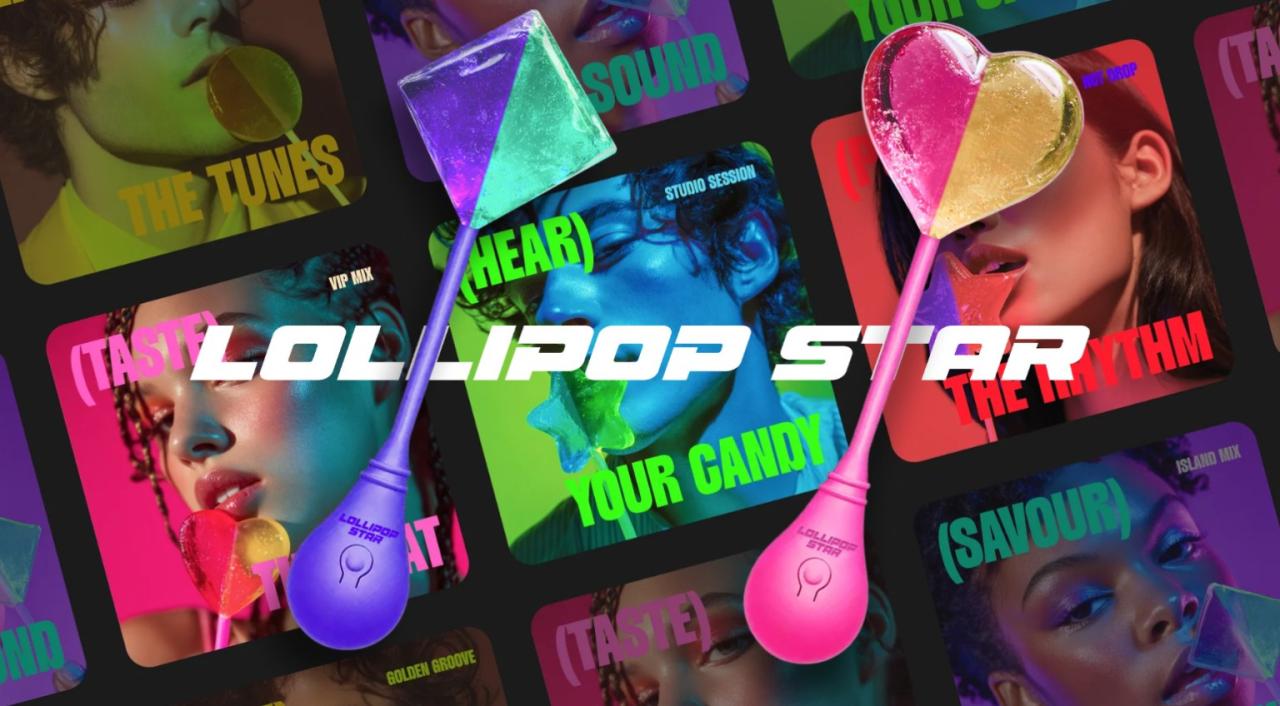
The Consumer Electronics Show (CES) has long been the global stage where tomorrow’s technology is unveiled to the world. Each year, this prestigious event in Las Vegas showcases everything from revolutionary artificial intelligence systems to futuristic vehicles and smart home innovations. However, amidst the serious technological advancements at CES 2026, one product captured attention not for its complexity, but for its delightful absurdity a lollipop that plays music inside your head .
The Lollipop Star, developed by Lava Tech Brands, represents a fascinating intersection of confectionery and audio technology. At first glance, it appears to be an ordinary lollipop sitting atop a slightly thicker-than-average plastic stick. But embedded within that unassuming stick lies sophisticated bone conduction technology that transforms a simple candy into a personal audio device . This innovative gadget demonstrates how technology continues to evolve into sensory experiences that were once confined to the realm of science fiction.
The Sweet Science Behind Bone Conduction
To truly appreciate the Lollipop Star, one must first understand the science that makes it possible. Traditional hearing involves sound waves traveling through the air, entering the ear canal, and causing the eardrum to vibrate. These vibrations then pass through the middle ear to the inner ear, where they are converted into signals that the brain interprets as sound .
Bone conduction technology takes an entirely different approach. Instead of relying on air-transmitted sound waves, it sends vibrations directly through the bones of the skull. When sound vibrations travel through the jawbone and skull to the inner ear, they bypass the eardrum and middle ear entirely, stimulating the cochlea directly . The inner ear then converts these mechanical vibrations into neural signals that the brain recognizes as sound.
This technology is not entirely new. Bone conduction has been utilized in specialized headphones designed for athletes who need to remain aware of their surroundings while listening to music. It has also found applications in hearing aids for individuals with certain types of hearing loss, and even in communication devices for military and emergency personnel .
How the Lollipop Star Works
The Lollipop Star transforms this established technology into an edible experience. The electronic components, including a battery and vibration mechanism, are housed within the stick of the lollipop. A small rounded section at the base contains the power button and the vibration mechanism that drives the bone conduction effect .
To experience the music, users follow a simple process:
A. Unwrap the lollipop and switch on the device using the button at the base of the stick.
B. Place the candy in the mouth and position it toward the back molars.
C. Bite down gently with the molars, creating contact that allows vibrations to travel through the teeth.
D. Allow the vibrations to travel up the jawbone and through the skull to the inner ear.
E. Experience music that sounds as if it is playing inside the head, without any external speakers or headphones .
The effect is remarkably private. People nearby hear nothing, as the sound never travels through the air. Instead, the experience is contained entirely within the user’s own head, creating an intimate personal concert that no one else can share . This privacy aspect represents one of the most intriguing features of the device, offering an audio experience that is completely isolated from the surrounding environment.
Artist Partnerships and Flavor Combinations
One of the most clever aspects of the Lollipop Star is how Lava Tech Brands has positioned it as a piece of pop culture merchandise. Rather than loading these candies with generic background music, the company secured partnerships with established artists to create an exclusive listening experience .
The initial lineup features three distinct flavor and artist combinations:
A. Peach flavor paired with Ice Spice, featuring tracks including “Munch,” “Baddie Baddie,” and “Big Guy.”
B. Blueberry flavor paired with Akon, featuring “Beautiful Day.”
C. Lime flavor paired with Armani White, featuring “Mount Pleasant” .
This approach transforms each lollipop into a single-use media format. Each candy comes preloaded with one specific song that cannot be accessed independently of the physical product. The song plays only while the candy is being consumed, creating an ephemeral experience that ends when either the battery expires or the lollipop dissolves .
The company’s marketing slogan captures this fusion of taste and sound perfectly: “A universe where taste meets sound, and every flavor has a frequency” . This positioning elevates the product beyond a simple novelty, presenting it as a deliberate exploration of multisensory experience.
The CES 2026 Reception
At CES 2026, the Lollipop Star generated significant buzz among attendees and media alike. Tech reporters who visited the Lava Tech Brands booth described the experience as strange, memorable, and surprisingly engaging .
One CNET reporter described the Lollipop Star as “the most ‘why not’ product she encountered at the show” . She noted that the music became audible once she bit down with her molars, with vibrations felt mainly through the handle before resolving into sound perceived inside the skull .
The show floor environment, with its ambient noise and constant activity, actually highlighted one of the product’s limitations. Background noise could overpower the subtle vibrations, making it difficult to distinguish lyrics clearly. However, the company provided earplugs at their booth to help visitors isolate the sound and appreciate the full effect of the bone conduction experience .
Despite these environmental challenges, attendees were universally intrigued by the novel sensation. The physical experience of biting down on a candy and having music materialize inside one’s head created a “wild sensation” that stood out among the many technological demonstrations at the event .
Price Point and Availability
Lava Tech Brands has positioned the Lollipop Star as an accessible novelty rather than a premium audio product. Each lollipop is priced at approximately $8.99, making it affordable enough for impulse purchases and novelty seeking .
Following CES 2026, the company announced plans to make the product available through their website, with a waitlist system for early access. Selective retail availability was also mentioned for the post-launch phase . The product is aimed at consumers who appreciate quirky technology, pop culture enthusiasts, and anyone curious about experiential gadgets .
Public Reaction and Social Media Response
As with any unconventional product, the Lollipop Star elicited a wide range of reactions across social media platforms. Some users expressed genuine enthusiasm for the innovative concept, with comments like “Who needs headphones when you can dance with a Lollipop Star!” capturing the playful spirit of the product .
Others were less impressed, drawing comparisons to similar technology that appeared in children’s toothbrushes in the early 2000s. Some social media users noted that toothbrushes featuring bone conduction technology and playing pop songs were marketed to children decades ago, suggesting the Lollipop Star is not as novel as it claims to be .
Critics raised several practical concerns:
A. Audio quality is limited and muted, especially in noisy environments.
B. The song plays only as long as the candy lasts, which may be only a few minutes.
C. If eaten too quickly, the entire song may not be heard; if eaten too slowly, the song may repeat.
D. The product creates potential electronic waste in the form of single-use battery components.
E. Some users questioned the necessity of audio technology in an edible product .
One social media user quipped, “I don’t want my candies playing ads when I eat them,” while another noted the irony of a product that requires biting down on candy, potentially affecting dental health, in order to hear music .
Is It Practical? A Critical Assessment
When evaluating the Lollipop Star through a practical lens, several limitations become apparent. The audio quality, while functional, does not approach the fidelity of traditional headphones or speakers. Ambient noise can easily drown out the subtle vibrations, and the company itself recommends using earplugs to fully appreciate the effect in noisy environments .
The single-use nature of the product raises questions about sustainability and waste. Each lollipop contains electronic components that cannot be reused after the candy is consumed or the battery dies, contributing to electronic waste .
Additionally, the product’s value proposition is limited to novelty and entertainment rather than serious audio consumption. It is not positioned as a replacement for conventional audio devices but rather as a fun, experimental experience .
However, these limitations may be beside the point. In an era where technology often takes itself too seriously, the Lollipop Star represents a playful departure from the norm. It does not claim to solve a pressing problem or revolutionize an industry. Instead, it offers something increasingly rare in consumer technology – pure, unapologetic fun .
The company’s straightforward response when asked why they created the product encapsulates this philosophy perfectly: “Why not?” This willingness to experiment, to create something simply because it is interesting and enjoyable, represents a refreshing approach in a tech landscape often dominated by serious, utilitarian innovations.
The Intersection of Food and Technology
The Lollipop Star belongs to a growing trend of experience-driven consumer products that blur the boundaries between food and technology. These multisensory experiences represent a departure from traditional product categories, creating new ways for consumers to engage with both food and technology simultaneously.
This trend extends beyond simple novelty. It reflects a broader cultural shift toward immersive, experiential consumption. Consumers increasingly seek products that offer not just utility, but memorable experiences that engage multiple senses. By combining taste and sound, the Lollipop Star creates a unique multisensory encounter that neither a traditional lollipop nor a standard audio device could provide alone .
The product’s marketing emphasizes this experiential quality, positioning each candy as a blend of “flavor, frequency, and music” rather than simply a sweet treat . This framing suggests that the true value of the product lies not in its practical utility but in the memorable experience it creates.
Bone Conduction Technology Beyond the Novelty

While the Lollipop Star may seem like a novelty, the underlying bone conduction technology has legitimate applications in various fields. Understanding these applications provides context for why this technology has attracted attention from developers and consumers alike.
Here are several practical applications of bone conduction technology:
A. Assistive Hearing Devices: Bone conduction hearing aids serve individuals with conductive hearing loss or single-sided deafness by delivering sound directly to the inner ear, bypassing damaged eardrums or middle ear structures .
B. Sports and Fitness Headphones: Athletes and outdoor enthusiasts use bone conduction headphones to listen to music while remaining aware of environmental sounds, such as approaching vehicles, other runners, or traffic signals .
C. Communication Systems: Military personnel, police officers, and emergency responders sometimes use bone conduction communication devices that allow clear transmission of instructions without blocking the ears, maintaining situational awareness in critical situations .
D. Water-Resistant Audio: Because bone conduction does not rely on air transmission through the ear canal, it can function effectively in wet environments where traditional headphones would fail, making it suitable for swimming and other water activities .
E. Medical and Rehabilitation Devices: Some medical applications use bone conduction for diagnostic purposes or as part of rehabilitation programs for individuals recovering from certain types of hearing damage .
The Lollipop Star adapts this established technology for an entirely new purpose, demonstrating the versatility of bone conduction and its potential for creative applications beyond traditional audio devices.
Marketing Potential and Future Possibilities
The artist partnerships that Lava Tech Brands has secured for the Lollipop Star hint at significant marketing potential. Each lollipop functions as a branded piece of merchandise, connecting the candy directly to specific artists and their music .
This creates interesting possibilities for the music industry:
A. Album launches could be accompanied by limited-edition lollipops featuring new singles.
B. Concert merchandise could include artist-branded candies with exclusive live recordings.
C. Music festivals could create special edition lollipops featuring festival performers.
D. Record labels could use the format for promotional giveaways and experiential marketing campaigns.
E. Pop-up events and brand activations could incorporate the lollipops as interactive elements .
The concept could also extend beyond music into other forms of audio content. Podcast episodes, audiobook excerpts, or even branded audio advertisements could theoretically be delivered through this edible format .
However, the single-use nature of the product and its limited play duration would need to be carefully considered for any serious content strategy. Each lollipop offers only a brief window of audio content, making it suitable for short-form content rather than extended listening experiences.
Environmental Considerations and Sustainability
The Lollipop Star raises important questions about sustainability and electronic waste. Each unit contains a battery and electronic components that become waste once the candy is consumed or the battery expires .
Environmental concerns include:
A. Electronic Waste: The battery and vibration mechanism in each stick represent non-recyclable electronic components that contribute to the growing problem of e-waste .
B. Single-Use Culture: The product embodies a single-use consumption model, where each experience requires a new unit, potentially encouraging disposable consumption habits .
C. Plastic Components: The stick housing the electronics is made of plastic, contributing to plastic waste concerns .
D. Reusability: While the company notes that the electronic base could theoretically be reused, the practical design does not facilitate easy separation of electronics from consumable components .
Social media critics have already raised these concerns, with some describing the product as “a waste of technology that will just pile up in landfills” . The company has not yet addressed these environmental concerns in their marketing or public communications, focusing instead on the novelty and experiential qualities of the product.
However, the Lollipop Star may also represent an opportunity to reconsider how we approach disposable consumer products. If the electronic components can be designed for easier separation and recycling, or if the battery life can be extended to allow for multiple uses, the environmental impact could potentially be reduced. The company’s future iterations of the product may address these concerns.
Final Thoughts: Innovation or Gimmick?
The Lollipop Star occupies an interesting space between genuine innovation and harmless novelty. It is undeniably clever, applying established technology in a creative new context that nobody asked for but many find intriguing. It offers an experience that is genuinely unique – a private concert delivered through a piece of candy, experienced inside one’s head without any external speakers or headphones.
At the same time, it is difficult to argue that the product solves any real problem or meets any significant consumer need. Its audio quality is limited, its play duration is brief, and its practical utility is minimal. As a replacement for headphones or speakers, it falls laughably short .
But perhaps that is precisely the point.
In a technological landscape increasingly focused on serious applications, artificial intelligence, and solving important problems, the Lollipop Star reminds us that innovation can also be fun, surprising, and delightfully pointless. It represents a type of creative exploration that sometimes produces unexpected breakthroughs and always generates conversation.
The company’s motto captures this philosophy perfectly: “Bite down, and feel the music” . It is an invitation to experience something new, not because it is practical or necessary, but simply because it is interesting.
Conclusion

The Lollipop Star represents a fascinating convergence of confectionery and technology, using bone conduction principles to deliver music through the teeth and jaw. Developed by Lava Tech Brands and unveiled at CES 2026, this unusual product offers a private, multisensory experience that combines taste and sound in a way never before attempted.
Whether viewed as a brilliant innovation or a questionable gimmick, the Lollipop Star has certainly succeeded in capturing attention and generating conversation. It demonstrates the versatility of bone conduction technology while raising important questions about sustainability and product design.
Available for approximately $8.99 and set to launch following CES 2026, the Lollipop Star positions itself as an accessible novelty rather than a practical audio device. Its limited play duration, single-use design, and modest audio quality all point toward its intended purpose – not to replace existing technology, but to offer a fleeting moment of fun and surprise.
In a world that sometimes takes technology too seriously, perhaps that is exactly the kind of innovation we need.