
The world of wireless technology is on the cusp of a significant transformation. For years, the evolution of Wi-Fi has been defined by a single, straightforward metric: speed. Each new generation promised faster peak theoretical throughput, from the early days of 11 Mbps to the multi-gigabit capabilities we see today. However, a fundamental shift is occurring with the arrival of the next generation of routers. As we look toward 2026, the narrative is no longer just about how fast we can go, but how reliably we can stay connected. This is the promise of the upcoming Wi-Fi 8 standard, a technology set to redefine our home and office networks by focusing on “ultra-high reliability” rather than just raw speed . Industry leaders like TP-Link have already announced their first Wi-Fi 8 routers, such as the Archer 8, scheduled for a release in October 2026, marking a new era in wireless connectivity .
The Paradigm Shift: From Speed to Ultra-High Reliability
To understand the significance of Wi-Fi 8, we must first look at the trajectory of its predecessors. Wi-Fi standards have historically prioritized increasing maximum data transfer rates. Wi-Fi 6 brought efficiency to congested networks, while Wi-Fi 7 (IEEE 802.11be) pushed the boundaries with Extremely High Throughput (EHT), introducing features like 320 MHz channel bandwidth and 4096-QAM to achieve theoretical speeds of up to 46 Gbps . While these advancements were impressive, they primarily focused on optimal conditions.
Wi-Fi 8, officially known as IEEE 802.11bn and dubbed the “Ultra-High Reliability” (UHR) standard, represents a major philosophical pivot . Instead of chasing higher peak numbers, the standard targets the real-world frustrations users face daily: inconsistent speeds, dropped connections, and latency spikes. The core objective is to ensure that the speed you pay for is the speed you actually experience, regardless of how many devices are connected or how far you are from the router .
Speeds That Stay Consistent
One of the most compelling arguments for Wi-Fi 8 is that it does not increase the maximum theoretical data rate compared to Wi-Fi 7. It retains the same 46 Gbps capability, 2.4/5/6 GHz frequency bands, 4096-QAM modulation, and 320 MHz channel bandwidth . However, by optimizing how data is transmitted and managed, Wi-Fi 8 ensures that network performance degrades much more gracefully as a device moves away from the router or as interference increases.
The goal is to create a “real-world performance” that is significantly better than Wi-Fi 7, even if the peak speed on paper remains the same. This represents a massive shift in user expectations: it’s no longer about having a super-fast connection when standing next to the router but having a reliable, fast connection everywhere in the home .
Key Technologies Driving the Wi-Fi 8 Revolution
Several groundbreaking technologies have been developed under the 802.11bn amendment to achieve this ultra-high reliability. These technologies address the root causes of poor Wi-Fi performance: signal degradation, interference, and network congestion.
A. Enhanced Long Range (ELR)
One of the most significant advancements in Wi-Fi 8 is designed to solve the problem of weak signals at the edge of a network’s coverage. The Enhanced Long Range (ELR) technology is specifically engineered to improve link margins for devices that are far from the access point or in areas with challenging signal propagation conditions due to walls, floors, or other obstacles .
ELR achieves this through two primary methods:
-
Repetition at the Resource Unit (RU) Level: This technology repeats data packets to ensure they are received intact even over weak signals.
-
A Separate Preamble for ELR: A dedicated preamble is included in the transmission to enable frame detection even at very low signal-to-noise ratios (SNR). This allows devices to maintain a connection when a Wi-Fi 7 device would have already dropped it. For Internet of Things (IoT) devices with limited transmit power or located in difficult spots, this is a game-changer .
B. Distributed Resource Units (DRUs)
In previous Wi-Fi generations, uplink transmissions (from a device to the router) often suffered from regulatory power spectral density (PSD) limits. This restricted how much power a device could use on a narrow bandwidth, creating a bottleneck. Wi-Fi 8 introduces Distributed Resource Units (DRUs) to solve this .
Instead of placing the tones of a resource unit on continuous, adjacent subcarriers, DRUs distribute them across a wider bandwidth. This clever approach allows devices to increase their total transmit power while staying within regulatory limits, resulting in up to an 11 dB power gain. The outcome is significantly higher throughput and a more reliable connection, especially for devices transmitting large amounts of data (like a smartphone uploading a video) .
C. Modulation and Coding Scheme (MCS) Enhancements
Wi-Fi 8 introduces advanced Modulation and Coding Schemes (MCS) that are optimized for reliability. TP-Link’s internal testing has shown that these enhancements can result in up to 33% higher throughput at comparable distances compared to Wi-Fi 7 . This means that in real-world conditions, you could experience a significantly faster connection speed in the exact same location where a Wi-Fi 7 network might be struggling.
These schemes include:
-
Unequal Modulation: This technology improves consistency when signal quality varies across different spatial streams, ensuring that the overall data rate is not dragged down by a single poor-performing stream .
-
Improved Coding: Enhanced coding schemes help maintain faster and more stable speeds over longer ranges by making the data packets more resilient to errors .
D. Multi-AP Coordination
In dense environments with multiple access points (APs), such as in a mesh Wi-Fi system, interference is a common problem. Wi-Fi 8 introduces advanced Multi-AP Coordination to mitigate this. This technology allows nearby access points to coordinate their transmissions and channel usage .
This coordination includes features like Coordinated Spatial Reuse (Co-SR), which enables neighboring APs to transmit simultaneously with minimal interference, and Coordinated Beamforming. By sharing resources and managing interference, Multi-AP Coordination can improve throughput by up to 15% in interference-heavy conditions. For users, this translates to a more stable and reliable connection in large homes or offices with multiple routers .
E. Low Latency and Seamless Mobility
Wi-Fi 8 is built for latency-sensitive applications. The standard aims to reduce the 95th-percentile latency by 25%, ensuring that even in the worst-case scenarios, delays are minimal . This is crucial for real-time applications like cloud gaming, augmented reality (AR), virtual reality (VR), and high-quality video calls.
Features include:
-
Prioritized EDCA (P-EDCA): This builds on existing mechanisms to give high-priority traffic (like game data) a “fast lane” on the network.
-
Low-Latency Indication (LLI): This allows a device to tell the router that it has urgent data waiting, ensuring it gets processed and transmitted immediately .
-
Seamless Mobility Domain: This technology drastically reduces the time it takes for a device to switch from one access point to another. Intel’s Chief Technology Officer has highlighted that Wi-Fi 8 can reduce roaming times from tens of milliseconds to just a few, with zero data loss—a massive improvement for users moving around a home or office while on a video call .
The 2026 Market Arrival: A Full Portfolio of Devices
The excitement surrounding this technology is already translating into concrete product announcements. Leading networking manufacturer TP-Link has given us a clear roadmap for the arrival of Wi-Fi 8, which was on display at major tech events .
TP-Link’s Archer 8 and Beyond
TP-Link is leading the charge with its Archer 8 series, announced as the company’s first Wi-Fi 8 router platform. Scheduled for a launch in October 2026, the Archer 8 is designed to be the centerpiece of a future-proofed smart home .
Here is the proposed rollout schedule from TP-Link:
-
October 2026: Launch of the Archer 8 (Wi-Fi 8 Router) .
-
Q1 2027: Introduction of the Deco 8 (Wi-Fi 8 Mesh System) , designed to blanket entire homes in the new standard’s reliable signal.
-
Q2 2027: Release of the Roam 8 (Wi-Fi 8 Travel Router) , ensuring even on-the-go connectivity can benefit from the new technologies.
-
Q2 2027: Availability of Wi-Fi 8 Range Extenders and Adapters, allowing users to expand their network or upgrade their devices .
This comprehensive portfolio suggests that TP-Link intends to make Wi-Fi 8 available across multiple use cases, from gaming and streaming to mesh networking and portable travel .
The Regulatory Hurdle: The FCC Question
While the technology is ready and the product roadmap is clear, one significant hurdle remains for the US market. As highlighted in a TechSpot report, TP-Link is still awaiting clearance from the Federal Communications Commission (FCC) to sell its new routers in the United States . This is a critical step that could impact the availability and pricing of these devices, so it will be essential to monitor the situation as the expected launch date approaches .
What This Means for Consumers: Benefits You’ll Feel
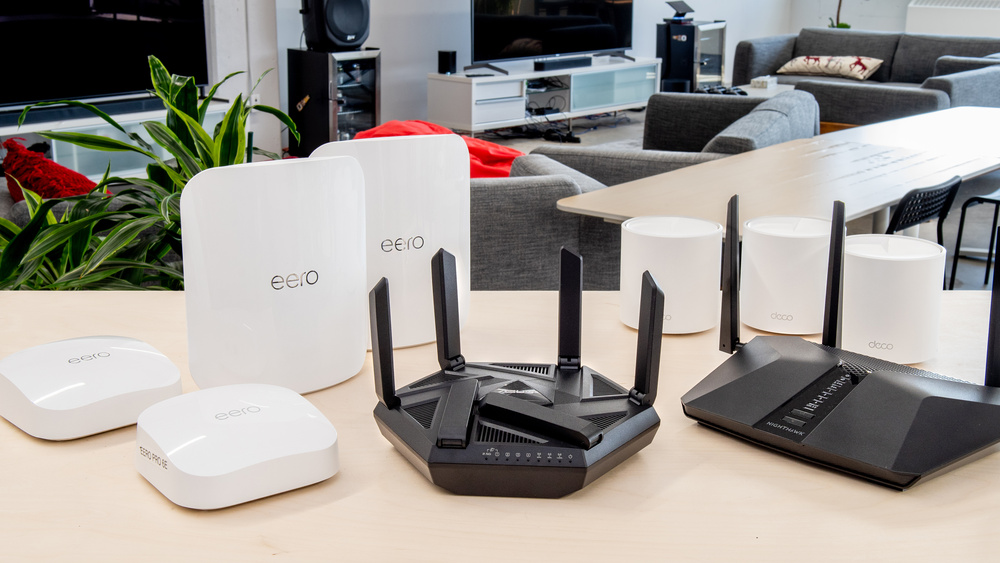
The transition to Wi-Fi 8 is not just a technical upgrade; it’s a tangible improvement to the digital experience. For the average consumer, the benefits will be immediately noticeable in several areas.
A. For the Smart Home and High-Density Environments
Modern homes are filled with dozens of connected devices: smartphones, laptops, smart TVs, gaming consoles, smart speakers, security cameras, thermostats, and countless IoT gadgets. In a Wi-Fi 7 or Wi-Fi 6 network, this many devices can lead to congestion and slowdowns. Wi-Fi 8 is specifically designed to thrive in these dense environments . With its Multi-AP Coordination and Dynamic Sub-Channel Operation, the network can intelligently manage traffic, ensuring that every device gets the bandwidth it needs without causing a traffic jam . TP-Link claims up to 30% signal-performance improvement in multi-floor environments for single devices and 10-20% in multi-device environments .
B. For Real-Time Applications and Businesses
The low-latency capabilities of Wi-Fi 8 make it ideal for mission-critical applications. For businesses, this means supporting a large number of employees in an office without network hiccups. For industrial applications, the ultra-reliable wireless link is essential for automation and real-time control . For consumers, the difference is felt in:
-
Gaming: Reduced lag and jitter, providing a competitive edge.
-
VR/AR: Seamless immersive experiences without the motion sickness-inducing stutter of a laggy connection.
-
Video Conferencing: Clear, uninterrupted calls even when multiple family members are streaming or gaming .
C. Compatibility and Ecosystem Integration
One of the most reassuring aspects of Wi-Fi 8 is its backward compatibility. It will work seamlessly with existing Wi-Fi 5, Wi-Fi 6, and Wi-Fi 7 devices. However, to unlock the full potential of ultra-high reliability, low-latency, and other advanced features, devices will need to be Wi-Fi 8 certified .
Furthermore, the integration of artificial intelligence (AI) and machine learning (ML) is a growing trend in Wi-Fi 8. The standard is expected to incorporate AI for intelligent scheduling, interference mitigation, and power optimization . This could lead to networks that learn user behavior and automatically adjust to provide the best possible experience. Intel has even hinted at features like “contextual awareness,” where the Wi-Fi network could detect the presence of a user to automatically unlock a device or transfer a call from a computer to a phone as the user walks away .
The Road Ahead: Standardization and Adoption
Despite the product announcements, it’s important to remember that the Wi-Fi 8 standard (IEEE 802.11bn) is still under development. The final version is not expected to be published until March 2028, with Wi-Fi Alliance certification following shortly after . The products coming in 2026 are based on the emerging specification, much like “Wi-Fi 6” routers were available before the official certification launch. This is a common practice to jumpstart the ecosystem, but it also means that early adopters should be aware that the standard might see minor changes before finalization.
Should You Upgrade?
With Wi-Fi 8 routers arriving in late 2026, the question on many minds is whether to wait or upgrade now. For users currently on Wi-Fi 5 or older, an upgrade to a Wi-Fi 6 or Wi-Fi 7 router would still be a huge leap in performance. However, if you are experiencing frequent network congestion, have a very large home with spotty coverage, or are serious about gaming and immersive technologies, waiting for the Wi-Fi 8 routers in October 2026 could be worth it . The promise of a more stable, reliable, and low-latency connection is a compelling reason to hold out for the next generation of wireless technology.
Conclusion

Wi-Fi 8 in 2026 is set to be a landmark in wireless connectivity. It represents a maturity in the technology where the industry’s focus has shifted from simply delivering faster peak speeds to delivering reliable, consistent performance that meets the demands of our hyper-connected, data-hungry lives . The new standard focuses on a real-world experience where users can enjoy a stable, high-quality connection throughout their home, whether they are gaming, streaming, or working.
With pioneers like TP-Link already announcing their products, the dawn of the Wi-Fi 8 era is just months away. This isn’t just an incremental upgrade; it’s a complete reimagining of what home networking can be, prioritizing reliability to ensure that our connectivity is as dependable as the electricity we use to power our devices. The future of Wi-Fi isn’t just faster; it’s smarter, more reliable, and here.