
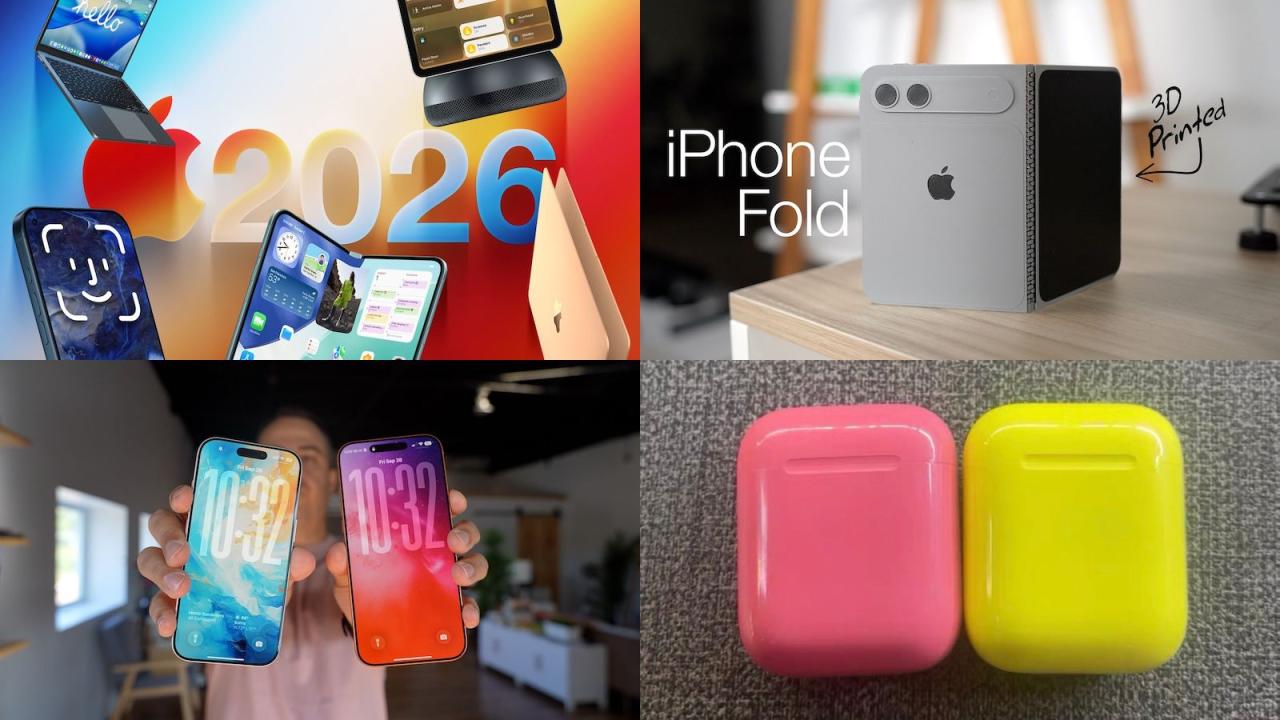
The anticipation surrounding Apple’s potential entry into the foldable smartphone market has reached a fever pitch. As 2026 progresses, the tech world is buzzing with rumors, leaks, and analyst predictions about what is widely being referred to as the “iPhone Fold” or potentially the “iPhone Ultra.” For years, Apple has been notably absent from this product category, allowing competitors like Samsung, Huawei, and Google to establish dominance. However, whispers from the supply chain, hints embedded within iOS 27, and recent developments at major tech conferences suggest that Apple’s foldable device is not only real but is on the verge of becoming a reality. This comprehensive article delves into every corner of the iPhone Fold 2026 rumors, from its expected launch date and innovative display technology to its design philosophy, specifications, and pricing.
A Decade of Rumors: Why Now?
The journey of the foldable iPhone has been one of the longest-running sagas in tech rumor history. For years, pundits have speculated about the release of a bendable iPhone, with many suggesting that Apple was waiting for technology to mature enough to meet their notoriously stringent quality standards. The primary obstacle has always been the display crease, the visible and tactile dip in the center of foldable screens that has plagued the industry. Apple’s reported refusal to accept this compromise has been the primary reason for the device’s delay. Unlike many competitors who were eager to release a product to be first to market, Apple’s strategy appears to have been to wait until they could deliver a user experience that lived up to their brand identity. This long wait seems to be coming to an end, as evidence mounts that the engineering challenges have finally been overcome .
Software Confirmation: iOS 27 Hints at Hardware
While Apple has made no official announcement, the company’s own software is providing the strongest evidence yet that a foldable iPhone is coming. During the WWDC 2026 keynote, Apple unveiled several features in iOS 27 that implicitly prepare the ecosystem for a new kind of device.
A major clue came from Craig Federighi, who introduced a new “Device Hub” feature for developers. This tool allows them to dynamically resize apps and simulate various screen configurations, moving away from designing for specific, rigid device sizes . This was further emphasized in the Platforms State of the Union session, where Cindy Barrett, Apple’s senior engineering manager of system experience, discussed “new ways for iOS apps to adapt across devices and screen sizes” and support for resizable iOS apps . This shift to a dynamic, fluid design paradigm is a clear necessity for an application that might be viewed on a 5.5-inch cover screen or a 7.8-inch tablet-like inner display.
Furthermore, deep within the iOS 27 developer beta code, software researchers have discovered references that confirm the device’s physical nature. Code strings referencing a “foldState” have been found, alongside terms like “mechanicalAngleDegrees” and “angleDegrees,” which suggest that iOS 27 will be capable of detecting the device’s folding state and even the exact angle of the hinge . This type of granular sensor data is essential for sophisticated features like drag-and-drop between halves of the screen, or a camera interface that adapts to the phone being used in a “tent” position. This evidence makes it nearly certain that foldable Apple hardware is not just a concept, but an upcoming product .
The Launch Date Dilemma: September 2026 or Early 2027?
While software hints point to its existence, the exact launch date of the iPhone Fold remains a subject of intense debate. The most widely accepted theory is a September 2026 unveiling alongside the iPhone 18 Pro and Pro Max models . Apple typically holds its annual iPhone event in September, and introducing the foldable alongside its traditional flagship would be a powerful statement about its place in the lineup. Reports from outlets like Moneycontrol suggest it is “on track” for a September debut .
However, this timeline is far from certain. A chorus of reports from the supply chain suggests potential delays. The CEO of Largan Precision, a major Apple camera lens supplier, hinted that while some new projects will be announced in Q3, others are being postponed to early next year . Simultaneously, Xinrixing, the company believed to be manufacturing the hinge for the foldable iPhone, is reportedly still waiting for Apple to finalize delivery dates . These supply chain signals have fueled speculation that the launch might slip into late 2026 or even early 2027.
Analysts are offering differing predictions. While some, like a Chinese leaker known as Fixed Focus Digital, have called delay rumors “false” and maintain that the most likely scenario is a launch with the iPhone 18 series , others are more cautious. Bloomberg’s Mark Gurman has suggested the device may not ship in the same September time frame as the Pro models . Even if there is a delay, it might only be a matter of a month or so, akin to the staggered launch of the iPhone X and iPhone 8 in 2017 . The most probable outcome is that Apple will announce the device in September 2026 alongside the iPhone 18 Pro lineup, but its availability might be limited or its actual shipment date could be pushed to later in the year, possibly in December .
Innovative Display Technologies: Killing the Crease
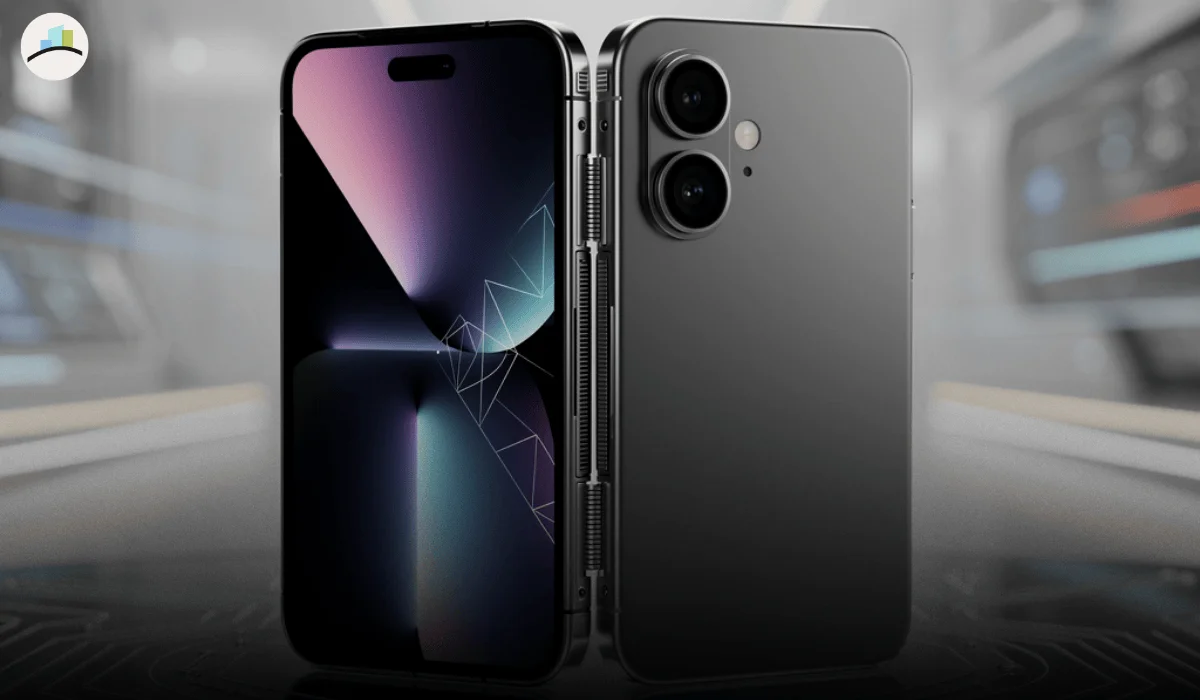
Apple’s primary focus has been on solving the crease problem, and rumors suggest they are employing a multi-faceted approach to achieve a crease-less, or near-crease-less, display. Three key technologies are being combined to make this happen:
-
Liquid Metal Hinge: The hinge is the most mechanically stressed component of a foldable phone. Apple is reportedly using an advanced hinge made from a combination of titanium and liquid metal (an amorphous metal alloy) . This material is extremely durable and is designed to withstand hundreds of thousands of folds. More importantly, the hinge is engineered to distribute the bending tension evenly across the display’s surface, reducing the localized stress that causes a crease to form .
-
Redesigned Display Panel: At CES 2026, Samsung Display showcased a prototype of a new foldable OLED panel with a significantly less visible crease compared to current commercial screens. While it was officially a “R&D concept,” it is widely believed to be the type of display Apple is planning to use . Apple’s display specifications are rumored to be distinct, with a 4:3 aspect ratio when unfolded, making it squatter and wider than competitor devices, similar to a small iPad . The panel itself will likely feature ultra-thin glass (UTG) with variable thicknesses—thinner at the fold point to improve bendability and thicker at the edges for impact resistance .
-
Sophisticated Optically Clear Adhesive (OCA): The final piece of the puzzle is the adhesive used to laminate the glass layers together. Apple is rumored to be using a specially formulated OCA that retains a degree of fluidity. This “micro-flow” characteristic allows the adhesive to fill in microscopic irregularities and gaps that form over time and with repeated folding . By filling these gaps, the adhesive reduces light scattering and physically smooths out the display, further minimizing the visible appearance of a crease .
In addition to these physical advancements, Apple is also reportedly shifting from an “on-cell” touch sensor architecture to an “in-cell” design . This change integrates the touch sensor layer deeper into the display stack, reducing air gaps and the potential for deformation, which contributes to a smoother screen surface over the long term .
Hardware Specifications: Power Meets Flexibility
Under the hood, the iPhone Fold is expected to be a technological powerhouse. Here is a breakdown of the rumored specifications:
A. Display & Form Factor:
The device will feature a book-style fold, opening horizontally like a book . It is expected to have two screens. An internal foldable display, rumored to be around 7.8 inches when unfolded, capable of providing an iPad mini-like experience . Its external cover screen is estimated to be about 5.5 inches, functioning as a standard smartphone when the device is closed . The inner display is rumored to have a 4:3 aspect ratio .
B. Processor & Performance:
The foldable iPhone is widely expected to be powered by the new A20 chip, manufactured by TSMC using a 2nm process . This next-generation processor would provide a significant leap in performance and power efficiency compared to the previous 3nm chips. It is also likely to be paired with 12GB of RAM, which would be a substantial increase over the current iPhone Pro models and necessary to handle the complex multitasking demands of a large, foldable display .
C. Camera System:
In what might be a surprising compromise to maintain a sleek profile, the iPhone Fold is rumored to have a dual rear camera setup rather than the triple-lens system found on Pro models . The main camera and an ultra-wide lens are expected to be 48MP sensors . A notable omission is a telephoto lens, which would be a key differentiator from the iPhone Pro lineup . There will likely be front-facing cameras on both the cover and inner displays .
D. Battery and Biometrics:
The dual-display design requires significant battery capacity, and the iPhone Fold is expected to feature the largest battery ever in an iPhone, with estimates ranging from 5,000 mAh to 5,800 mAh . To save internal space, a crucial decision appears to have been made to drop Face ID. Instead, a side-mounted Touch ID sensor, likely integrated into the power button, will be the primary biometric authentication method .
Design and Build Quality: The Apple Standard
The overall design philosophy is expected to follow Apple’s signature aesthetic: a premium, minimalist approach using high-end materials. The chassis is rumored to be constructed from a titanium alloy, which is both strong and lightweight . When unfolded, the device is expected to be remarkably thin, measuring approximately 4.5mm, which will make it one of the thinnest foldables on the market . When folded, its thickness is predicted to be around 9.5mm . The combination of a titanium frame, advanced hinge, and carefully engineered display materials suggests a device that will be both durable and feel incredibly premium in the hand.
Pricing and Market Positioning
Given the advanced technology and premium materials, the iPhone Fold is not expected to be affordable. It is positioned as a new ultra-premium flagship tier, likely starting at a price point of around $2,000 . Some rumors suggest the base 256GB model could cost around $2,320, with prices escalating to nearly $2,900 for a 1TB model . To put this into perspective, this places the iPhone Fold in direct competition with the most expensive foldable phones on the market, such as the Samsung Galaxy Z Fold series. It would be Apple’s most expensive smartphone, designed as a status symbol and a showcase of technological innovation. While this price tag may alienate many consumers, it is a calculated move to cement Apple’s position in a new, high-end market segment .
Conclusion: A New Era for Apple

The Apple Foldable iPhone 2026 represents a pivotal moment in the history of the tech giant. It marks the company’s entrance into a new product category, a testament to years of R&D and a willingness to wait for the right technology to meet their exacting standards. The evidence is now overwhelming: the iPhone Fold is coming. Whether we see it in September 2026 or early 2027, it is poised to be a game-changer.
Key Rumors at a Glance:
-
Launch: Announced alongside iPhone 18 Pro in September 2026; availability possibly delayed to late 2026 or early 2027 .
-
Design: Book-style fold with a 7.8-inch inner screen and a 5.5-inch cover screen, featuring a 4:3 aspect ratio .
-
Technology: “Crease-less” display using a liquid metal hinge, variable-thickness UTG, and advanced OCA adhesive .
-
Performance: Powered by the Apple A20 chip (2nm process) and 12GB of RAM .
-
Camera: Dual 48MP rear camera system (no telephoto lens), replaced by an ultrawide lens .
-
Security: Touch ID integrated into the side power button, replacing Face ID .
-
Battery: Largest ever in an iPhone, estimated at 5,000 to 5,800 mAh .
-
Price: Starting around $2,000, making it Apple’s most expensive phone .
For over a decade, the tech community has asked, “When will Apple make a foldable phone?” It appears the answer is finally coming. The combination of the rumored “crease-free” display with Apple’s ecosystem synergy could redefine what a smartphone can be, potentially setting a new standard for the entire industry. The wait is almost over.